
Add to that the fact that Georgia is far more affordable than most European countries, and suddenly it starts making sense why it’s becoming increasingly popular with Indians. That’s exactly how it caught my attention.
Often called “Europe on a budget”, Georgia is a great place to begin your European adventures. For seasoned Europe travellers, it may not feel radically different, but for Indian travellers looking for destinations with fewer visa hassles, Georgia is an easy win. If you already hold a US, UK, or Schengen visa, you can enter Georgia without applying for a separate Georgian visa.
The icing on the cake? IndiGo now flies directly to Tbilisi, making air travel surprisingly economical.
And just like that, a girls’ trip to Georgia was sealed. Here’s what lay in store for us.
Day 1 – First Sips of Georgia (Tbilisi)
Since our flight landed early morning in Tbilisi, a few hours of good sleep at Hotel Orion was enough to recharge us for our first brush with the city.
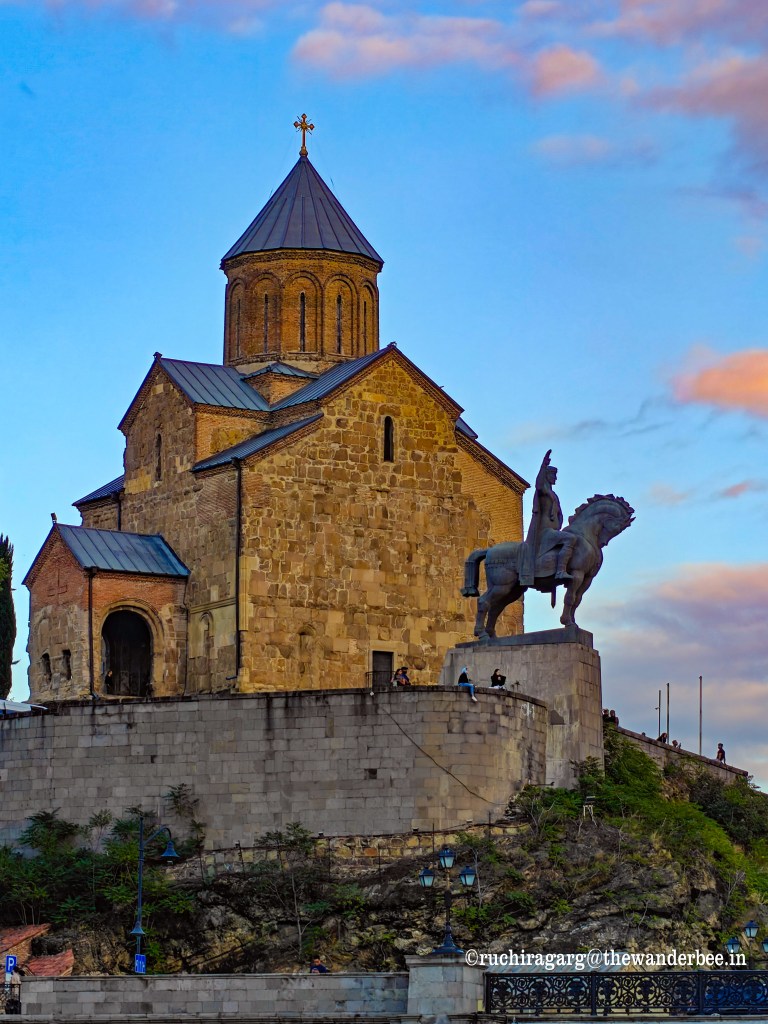
We began with two of Tbilisi’s most iconic symbols — but not before stopping at the equestrian statue of King Vakhtang I Gorgasali, the 5th-century Georgian king credited with founding the city. Overlooking the Kura (Mtkvari) River, the statue stands tall as a reminder of strength, leadership, and origins.
Right next to it sits Metekhi Church (formally, the Church of the Assumption of the Virgin Mary). Dramatically perched on a cliff edge, this 13th-century church has served many roles over time — royal chapel, fortress, even prison — before returning to being a place of worship.
From here, we walked to the cable car point that took us up to the Mother of Georgia — the perfect metaphor for the country. Erected in 1958 to mark Tbilisi’s 1,500th anniversary, she holds wine in one hand and a sword in the other — welcoming friends, warning foes. Warm, proud, and unapologetically fierce.
There are a few souvenir shops and small eateries around the statue — helpful if you’re caught in a drizzle or waiting for your ride back. And for Indians, there’s an unexpected nostalgia bonus: musicians playing melodious songs from Raj Kapoor films. Nearly four decades after his passing, he remains hugely popular across the former Soviet region.
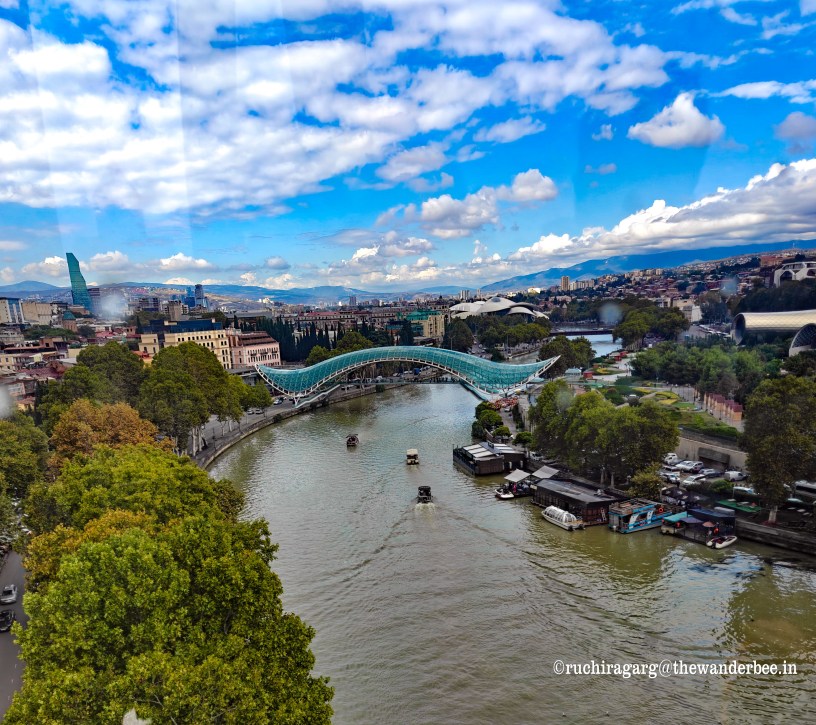
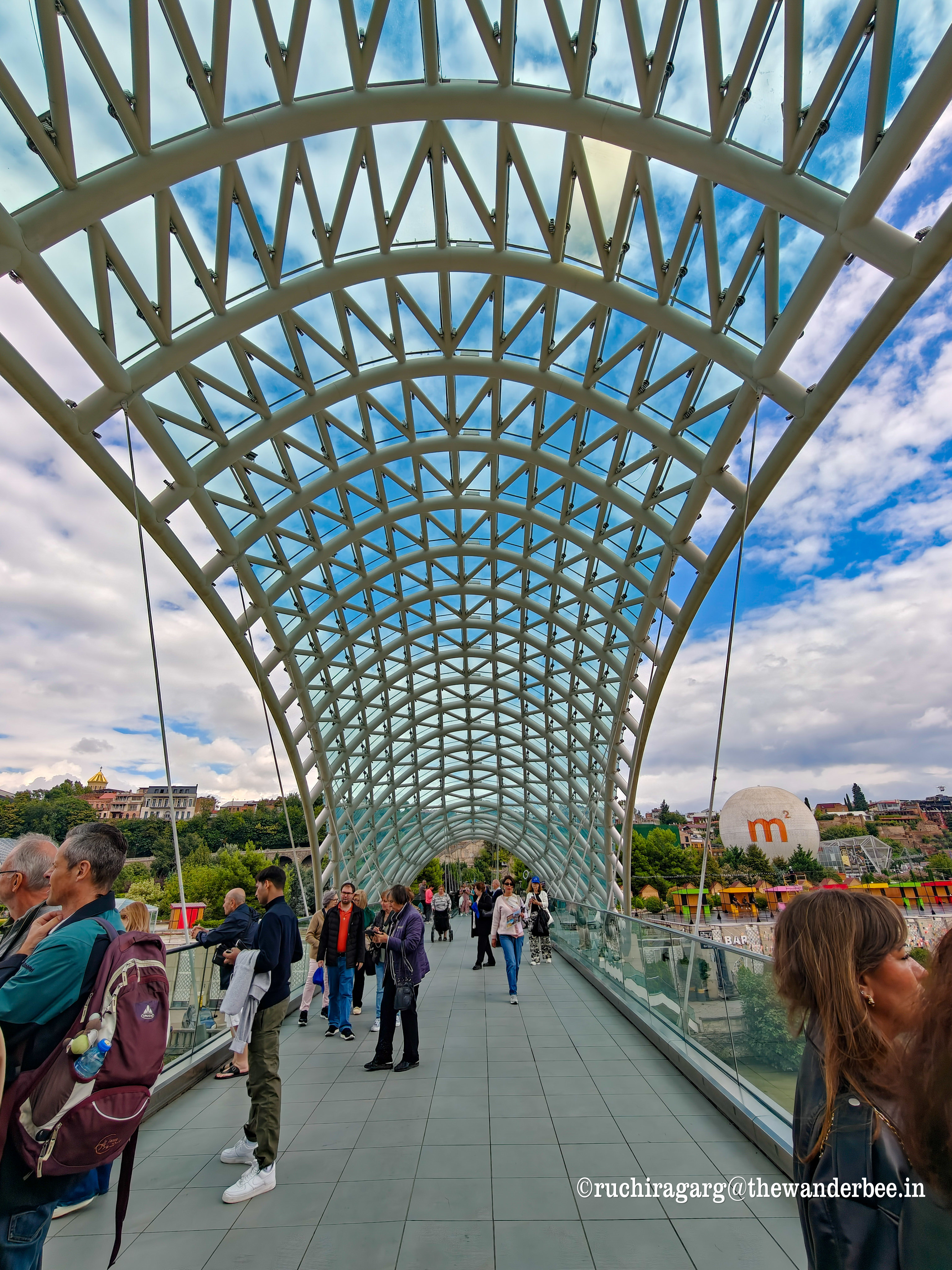
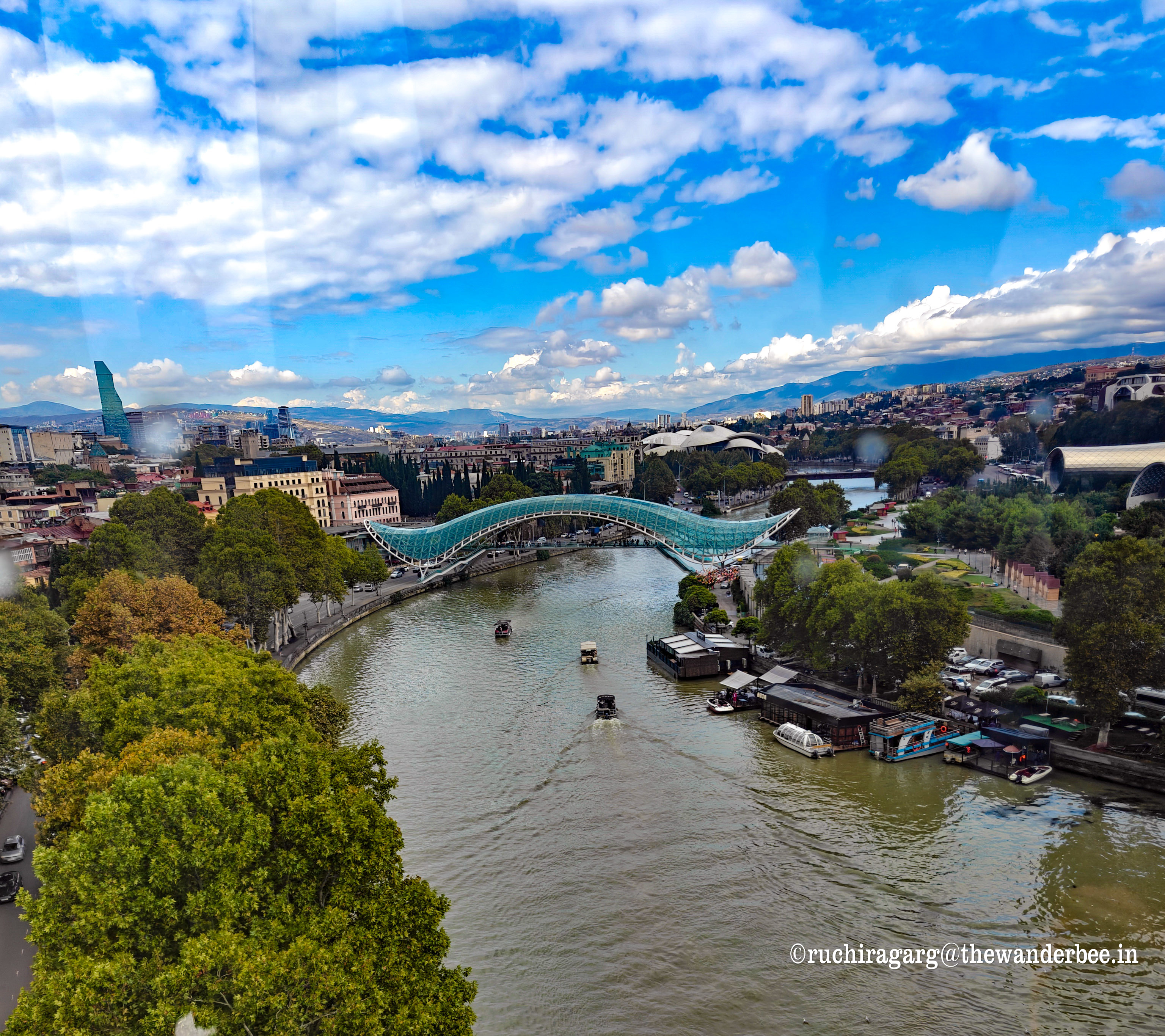
Once back down, we walked across the Bridge of Peace — a sleek glass-and-steel structure that glows beautifully at night, stitching Georgia’s ancient soul to its modern aspirations.
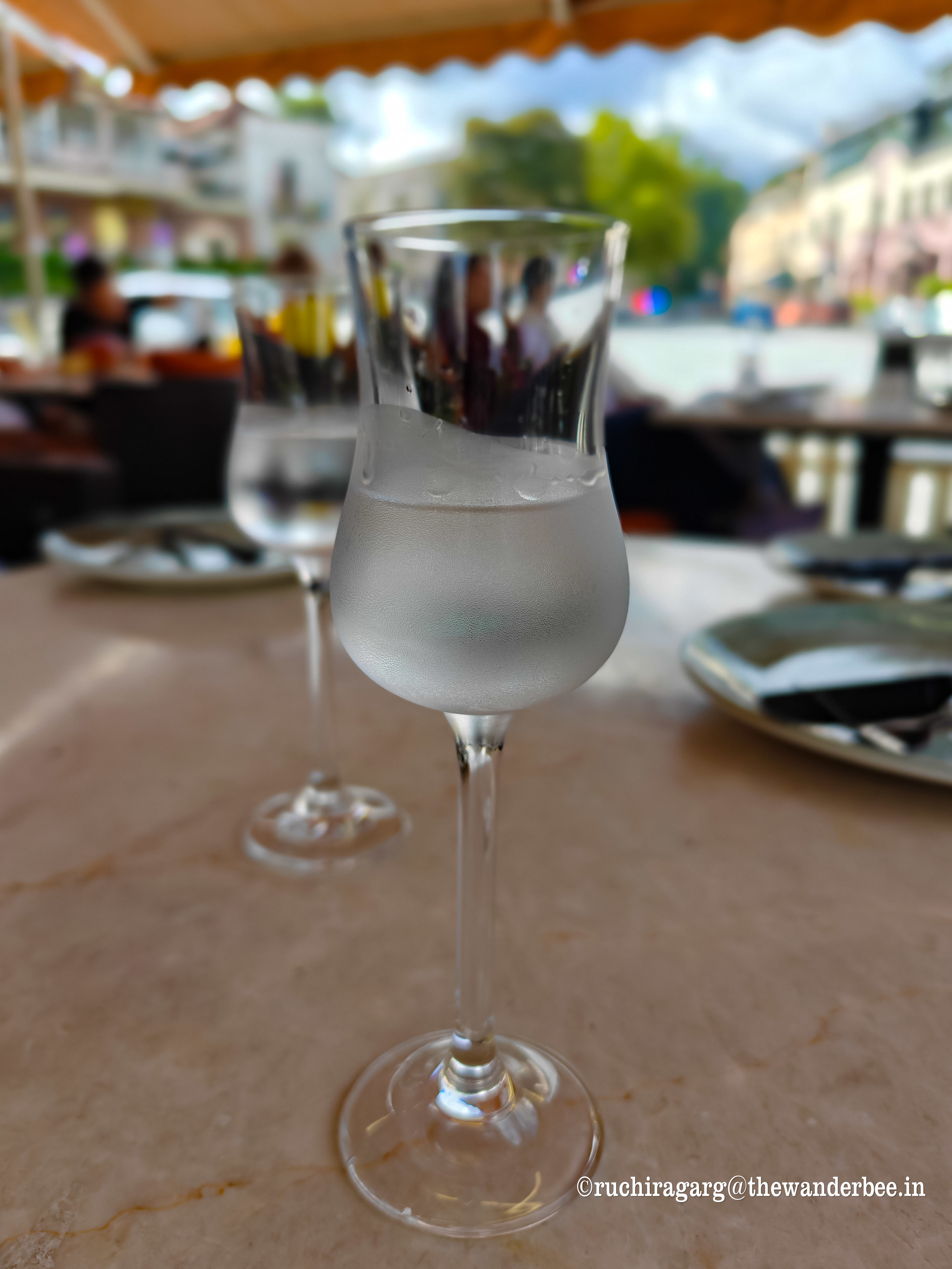
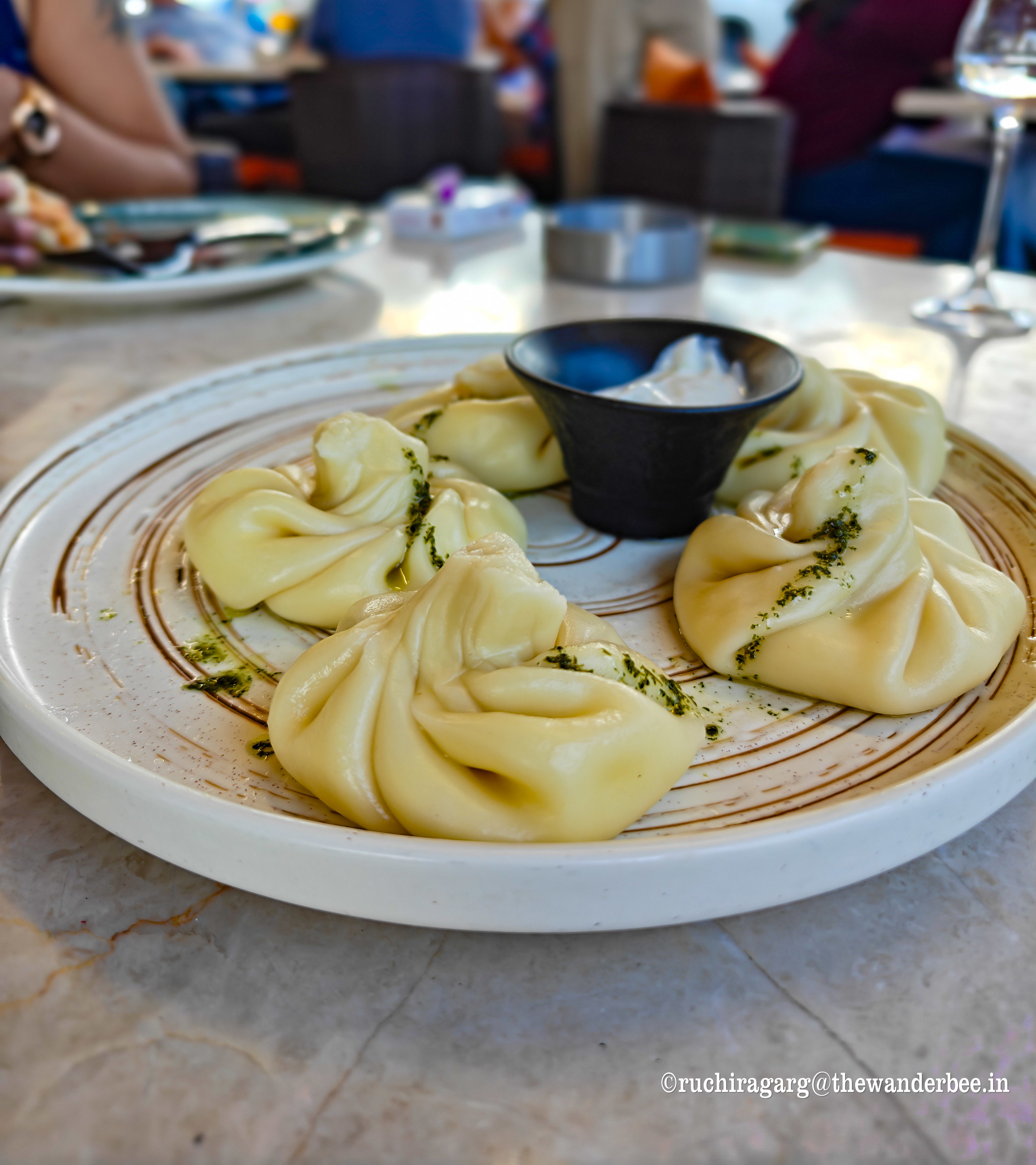
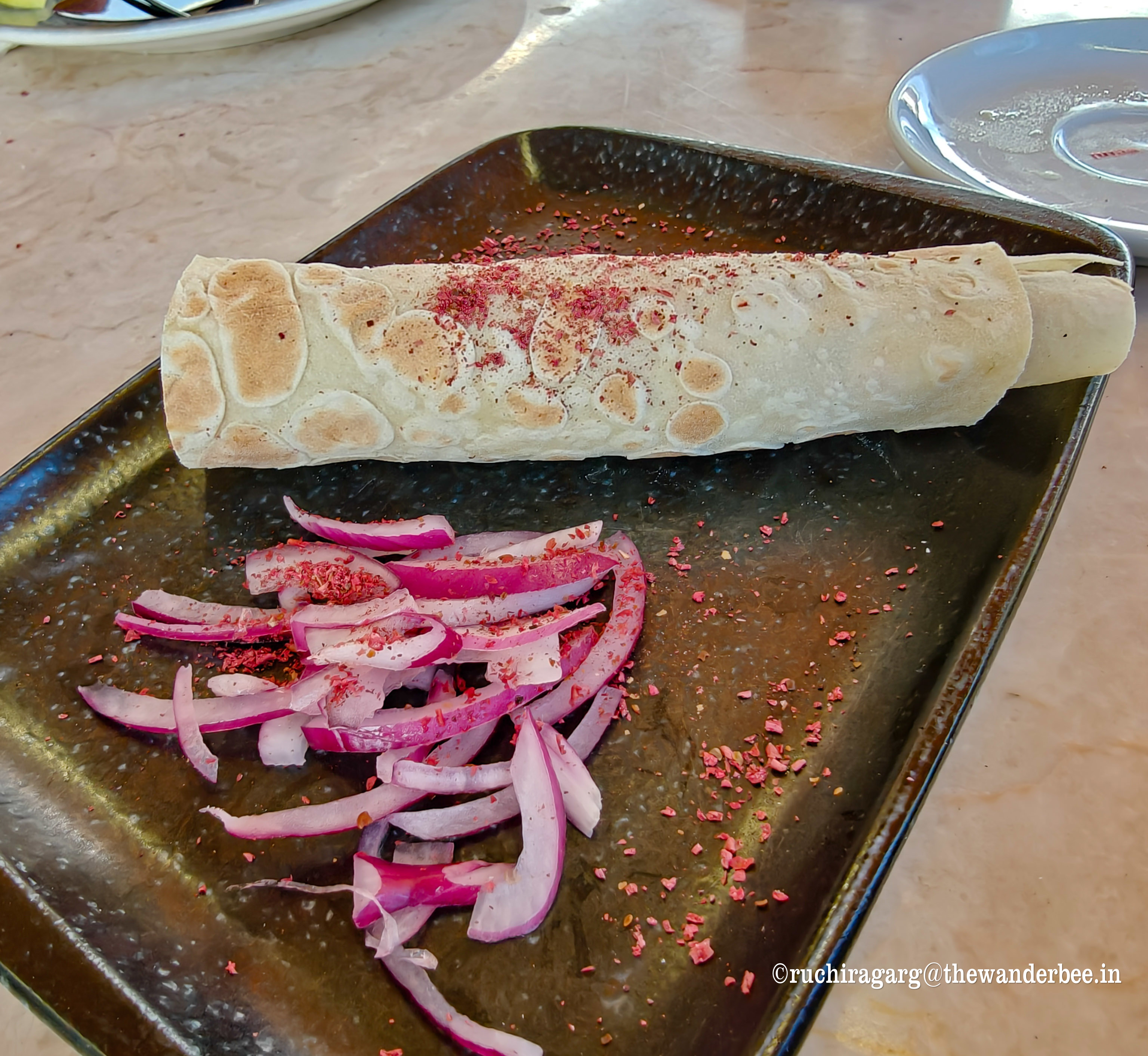
Lunch was at Seidabadi Restaurant, with perfect outdoor seating for a sunny afternoon. Juicy kebabs, plates of steaming khinkali (Georgian dumplings), and my first bold swig of chacha — Georgia’s potent grape spirit — set the tone for the days ahead.
Post lunch, we walked past the sulfur baths of Abanotubani and through an underground tunnel to reach the jetty for a short boat ride on the Mtkvari River. Boats operate near the Bridge of Peace and Rike Park — that’s where we boarded. The ticket included a glass of wine and peppy music, which meant even an “ordinary” boat ride refused to stay ordinary. With music, laughter, and strangers who felt oddly familiar, it turned into a floating party.

Georgia doesn’t ease you in. It pulls you straight into the middle of its story.
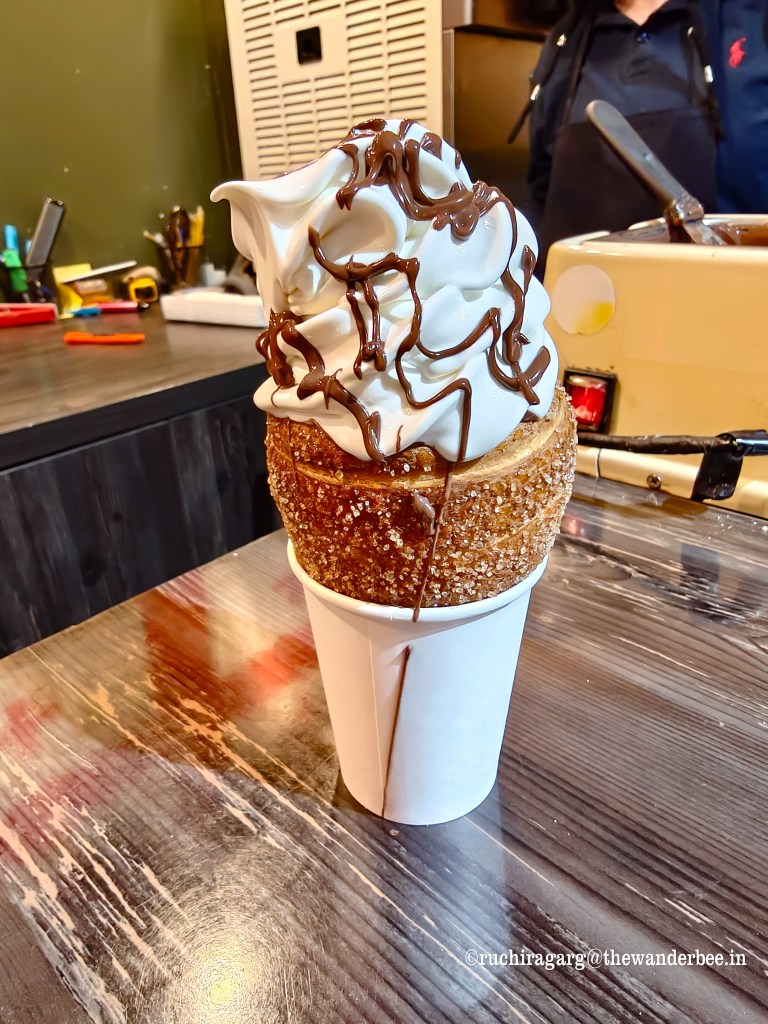
With our hotel centrally located, we ended the day with an easy stroll for dinner, followed by a generous dose of addictive chimney cakes.
Day 2 – Sacred Calm and Wine-Soaked Joy (Bodbe & Signaghi)
Day 2 began with a two-hour drive and us on our best behaviour at Bodbe Monastery, one of Georgia’s most sacred sites. Nestled among cypress trees, it is believed to house the relics of Saint Nino, who brought Christianity to Georgia in the 4th century. The air felt still and reverent — the kind of place that gently insists you slow down.
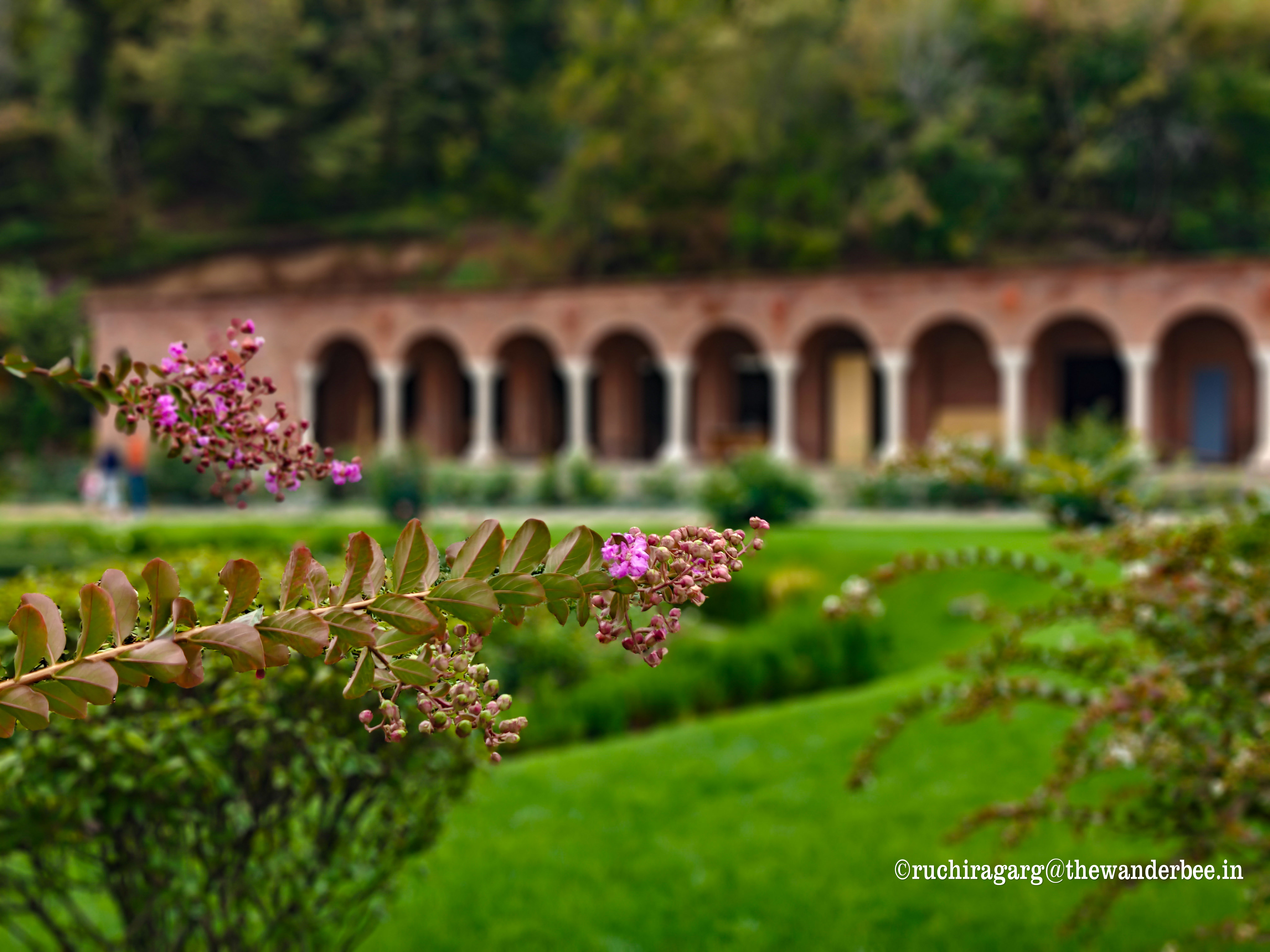
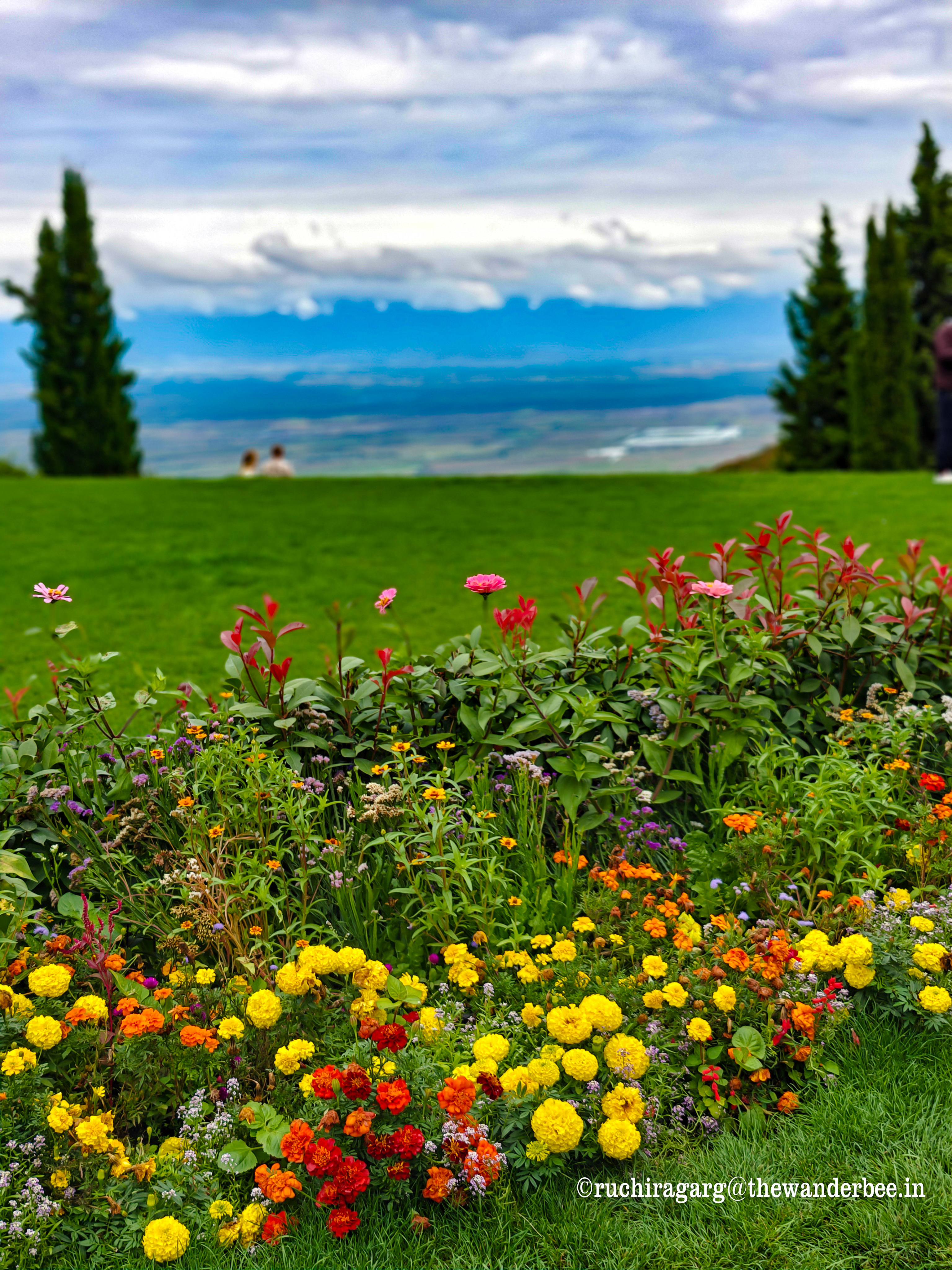
A short drive away, Signaghi changed the tone completely. Often called the “City of Love,” this charming hill town in the Kakheti wine region is all cobbled streets, pastel balconies, and panoramic views of the Alazani Valley.

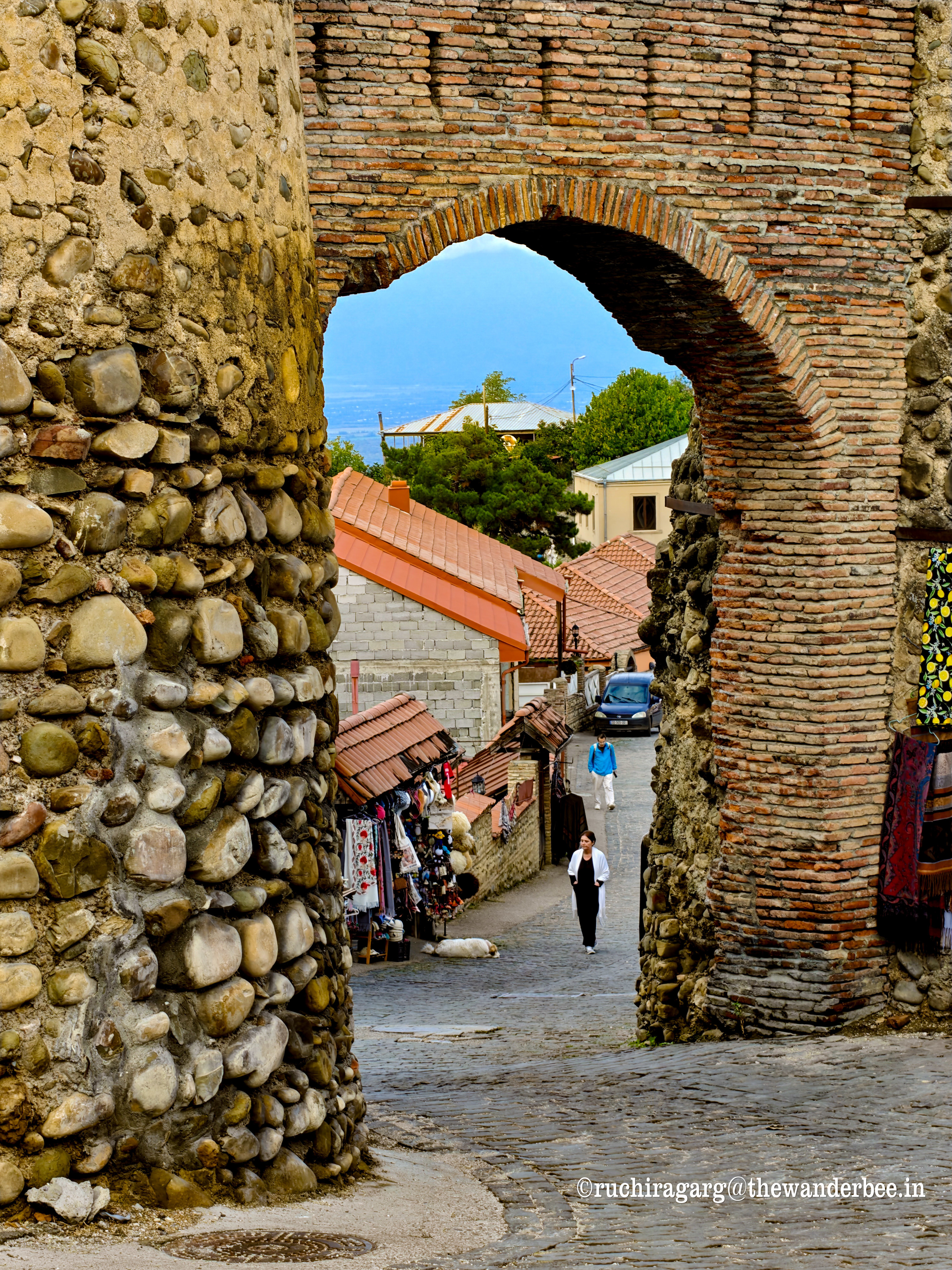
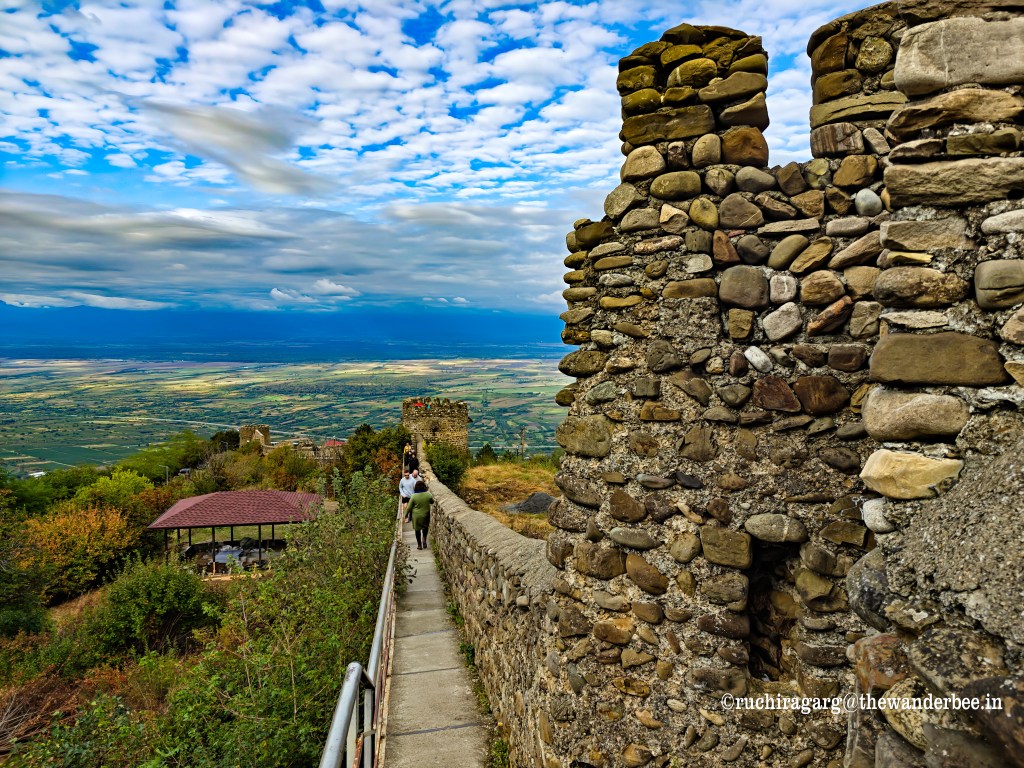
Signaghi also boasts one of the largest surviving fortifications in Georgia. Built in the mid-18th century under King Erekle II, the city walls stretch over 4.5 km, with 23 watchtowers and multiple arched gates named after nearby villages. There are several points where you can climb the walls via stairs and ladders for sweeping valley views — which we did.
I also tried the famous wine ice-cream here and have to confess it was so unappetising that I skipped giving it another chance for the rest of the trip.

And then came the wine tasting.
What I expected to be routine turned into an emotional masterclass in Georgian pride. Wine here isn’t a beverage — it’s identity. With over 8,000 years of winemaking history, Georgia considers itself the birthplace of wine, traditionally fermented in clay vessels called qvevri.
Our toastmaster didn’t just pour wine — he poured stories, humour, and affection. After endless rounds of Gaumarjos!, we were officially tipsy on views, wine, and life itself. That said — beware. In all this enthusiasm, you may end up buying wine at double or triple the market price. A bottle selling for 15 lari in Tbilisi markets was sold here for 40 lari 😊.
Day 3 – Fortresses, Frontiers & Familiar Comforts (Ananuri, Gudauri)
Day 3 arrived as a cocktail of contrasts. We packed our bags and headed out for an overnight stay in Gudauri.
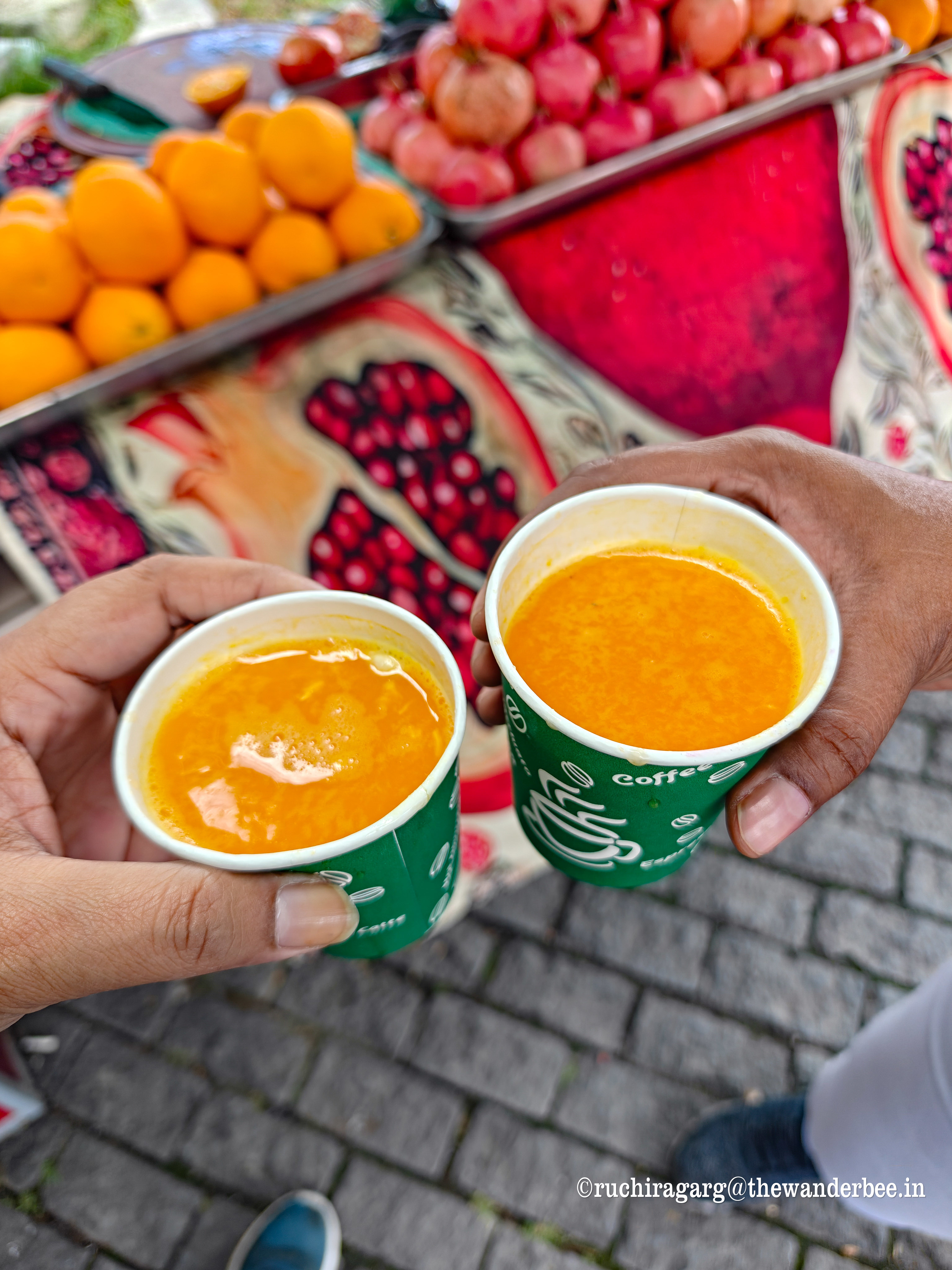
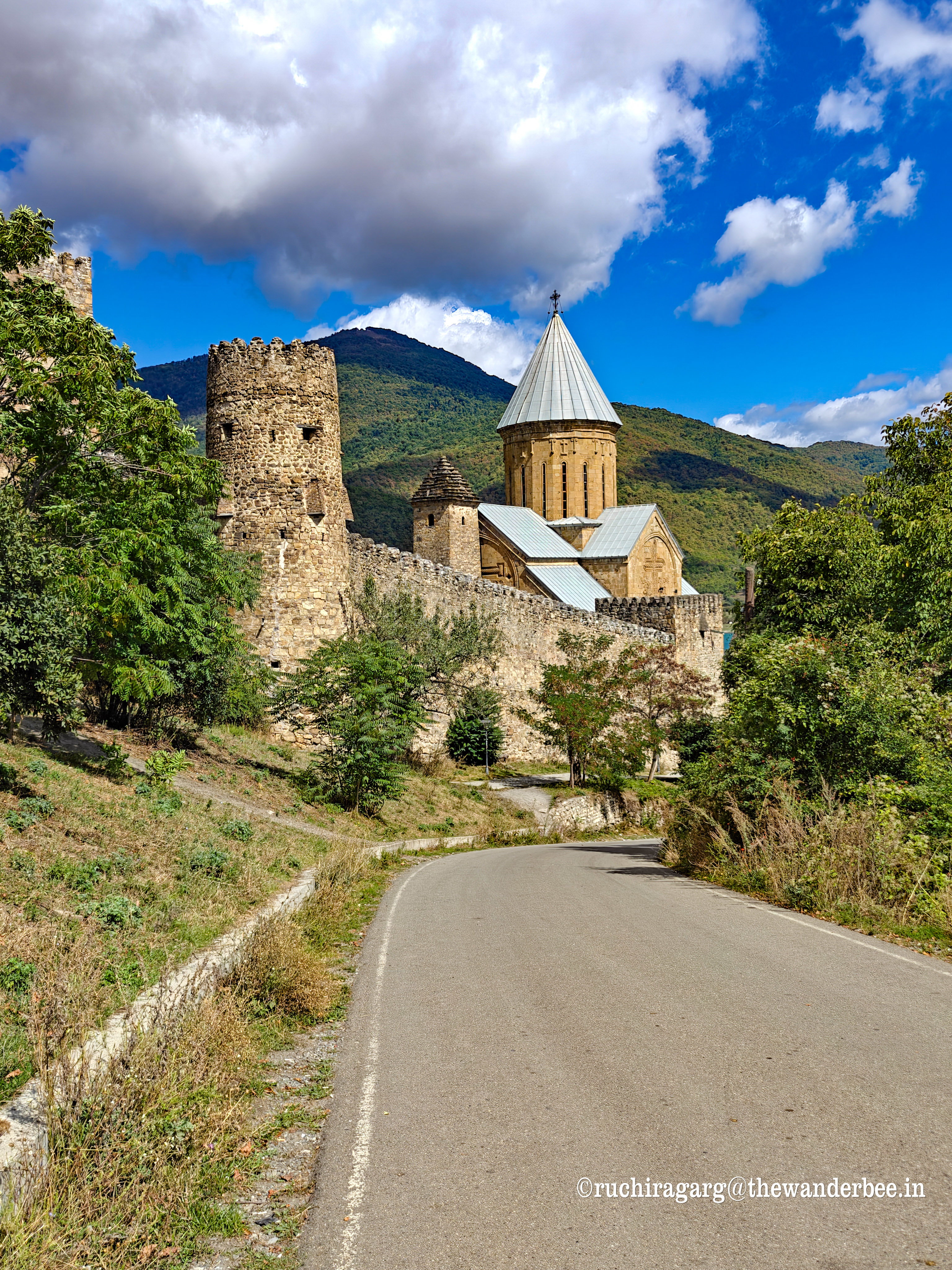
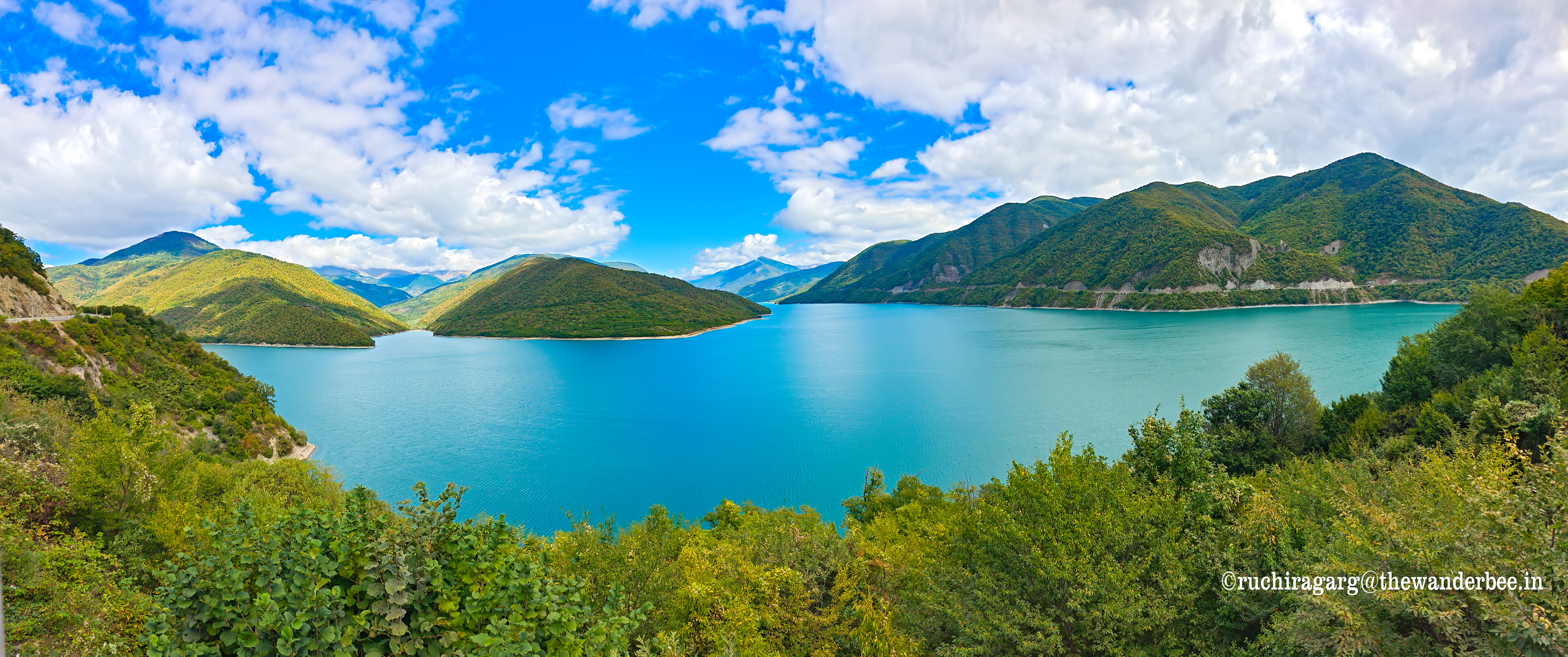
En route, we stopped at Ananuri Fortress, once the residence of Georgian dukes, overlooking the turquoise waters of the Zhinvali Reservoir. The ruins themselves aren’t particularly impressive, but sitting there with orange juice as potent as wine and soaking in the views made the stop worthwhile.

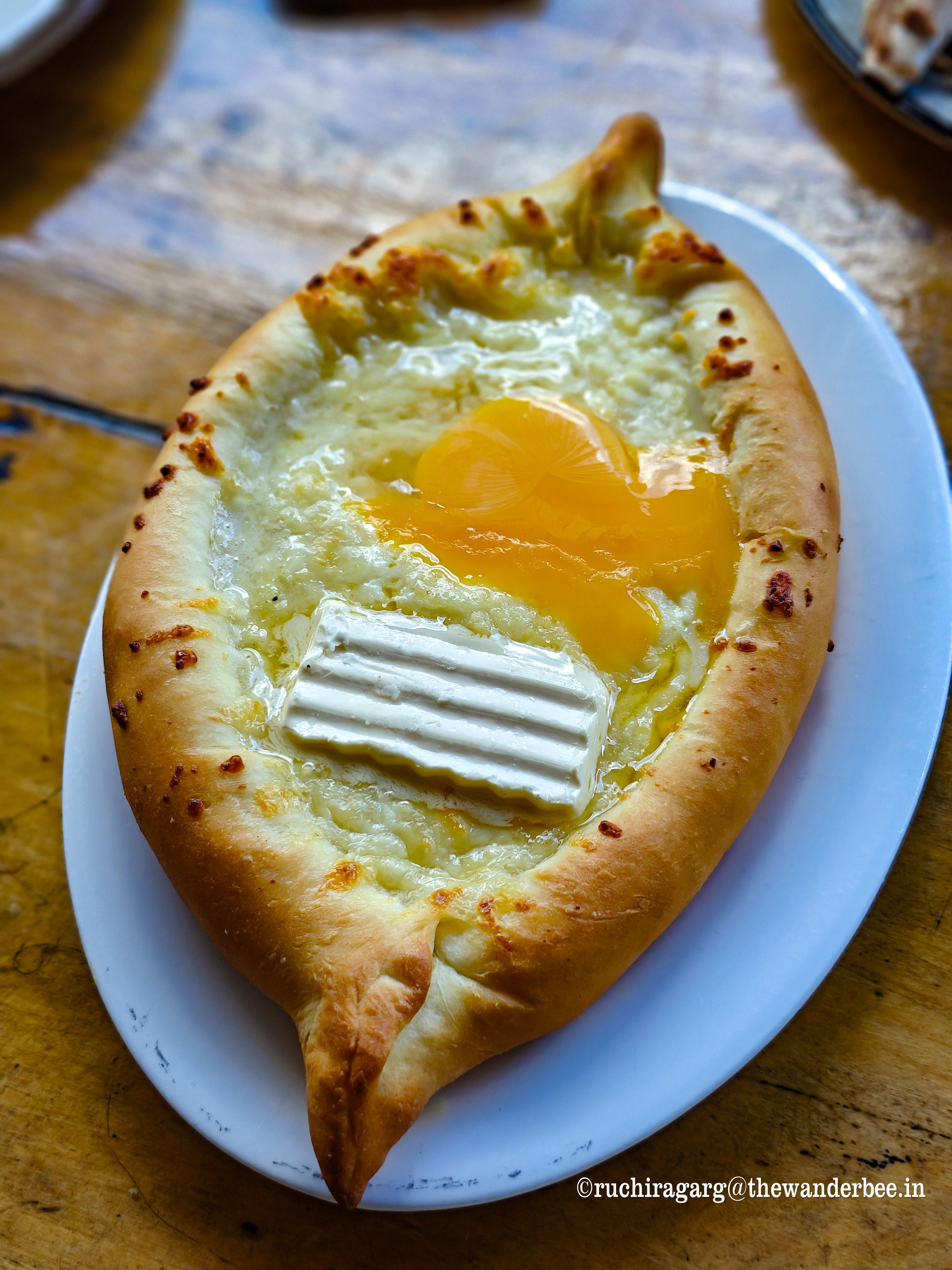
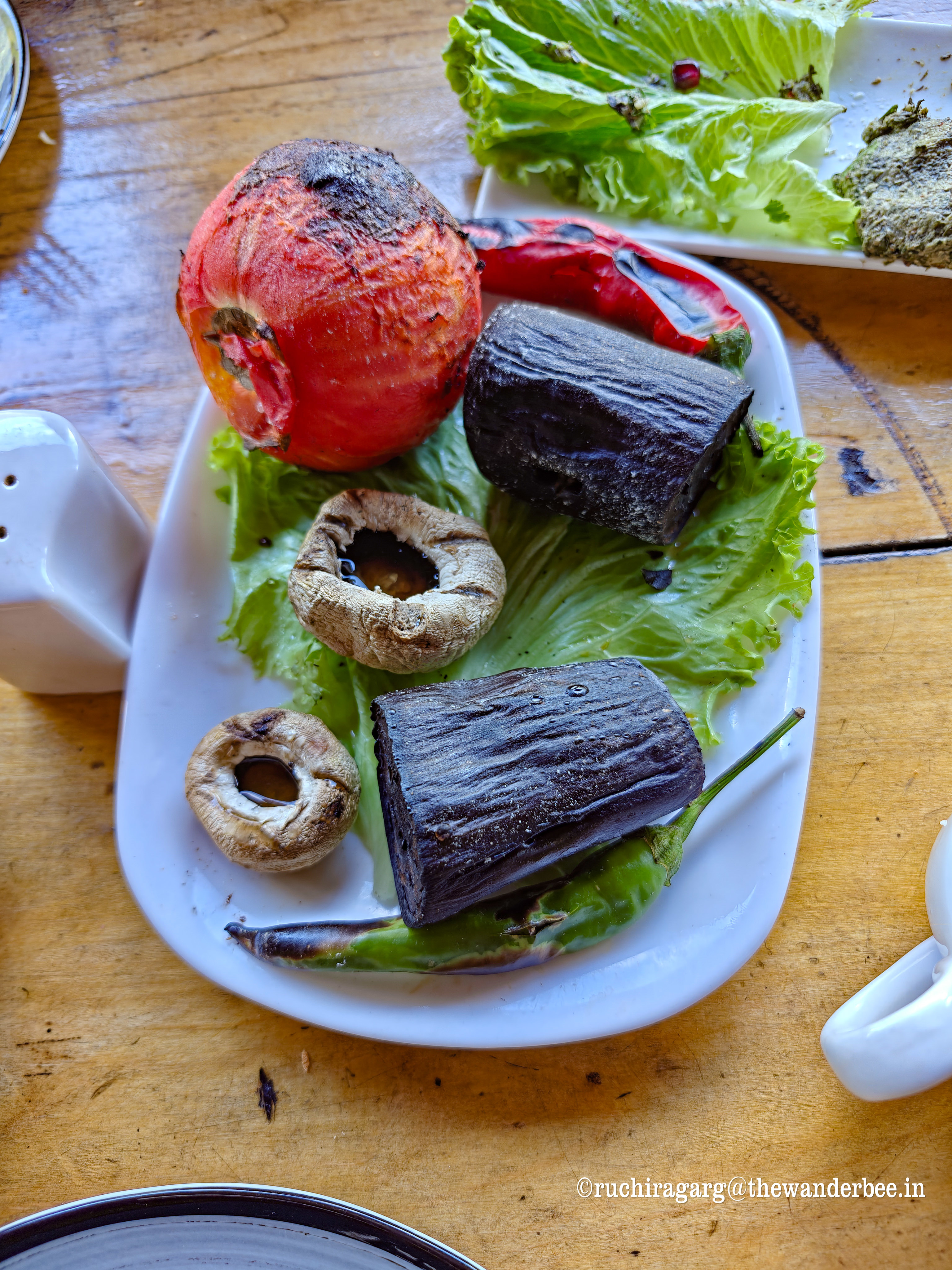
Lunch was at a Georgian restaurant where we enjoyed khachapuri and chicken barbecue. A word of caution — skip the vegetarian barbecue in Georgian restaurants unless you’re feeling adventurous.
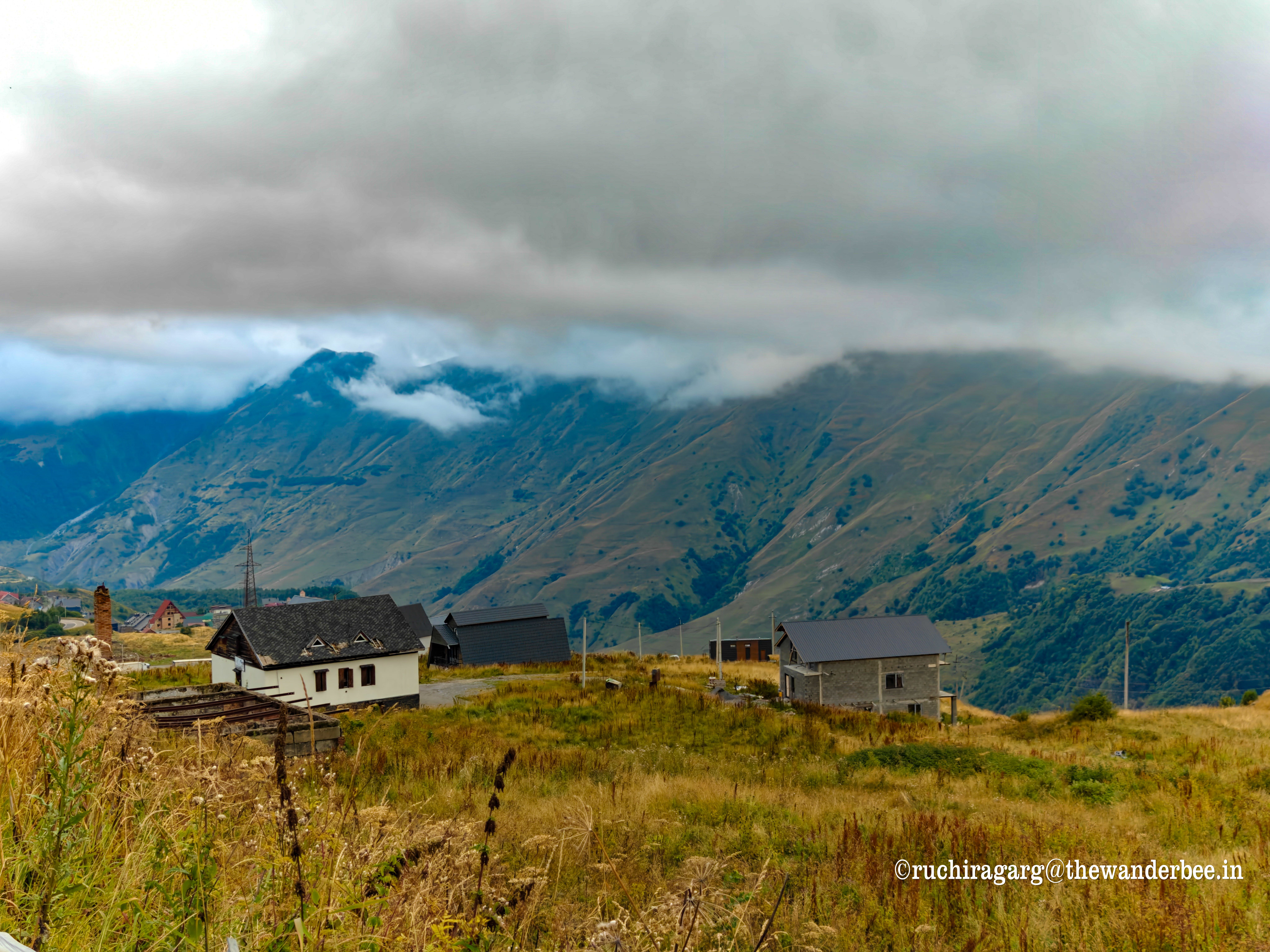
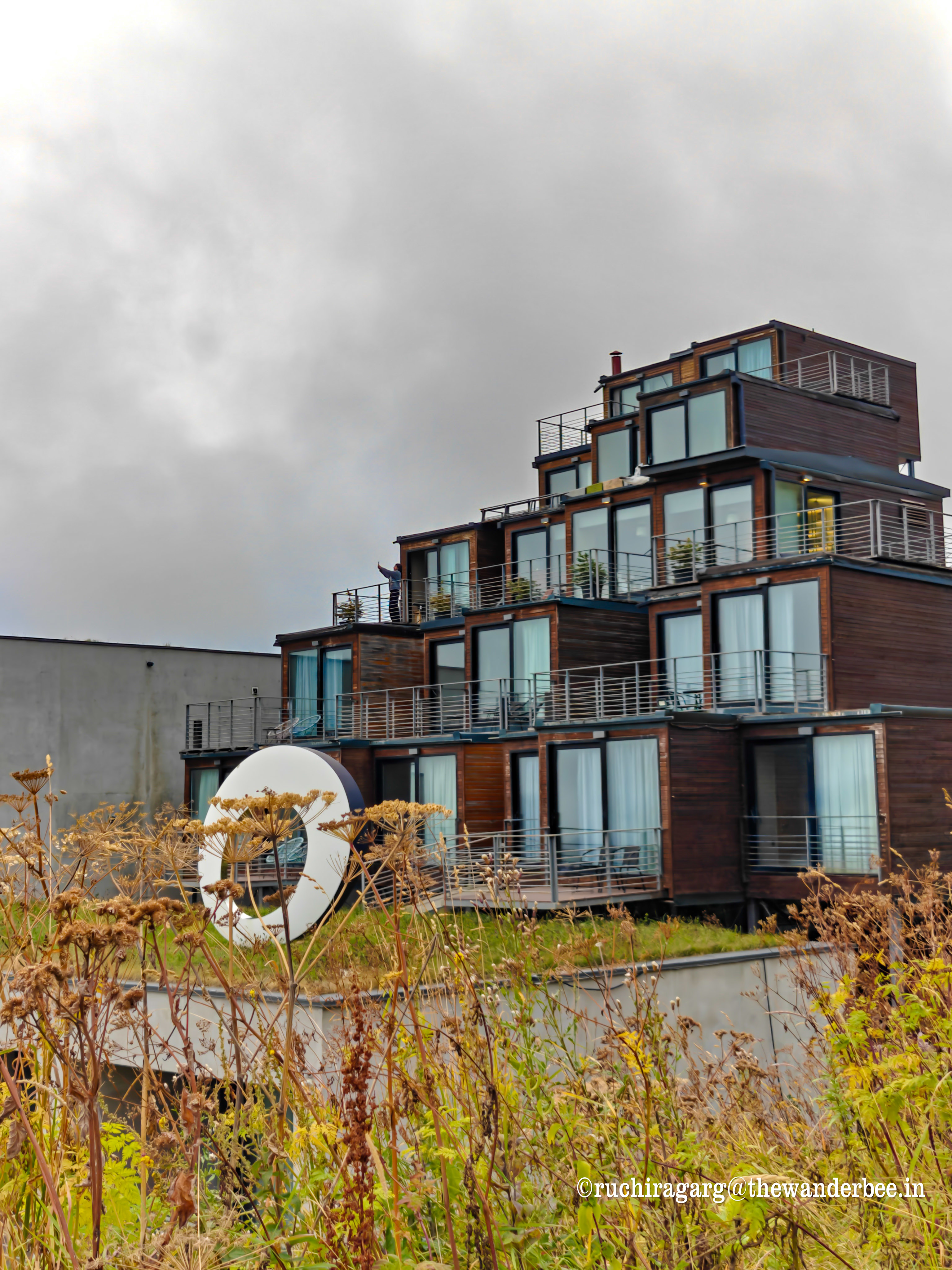
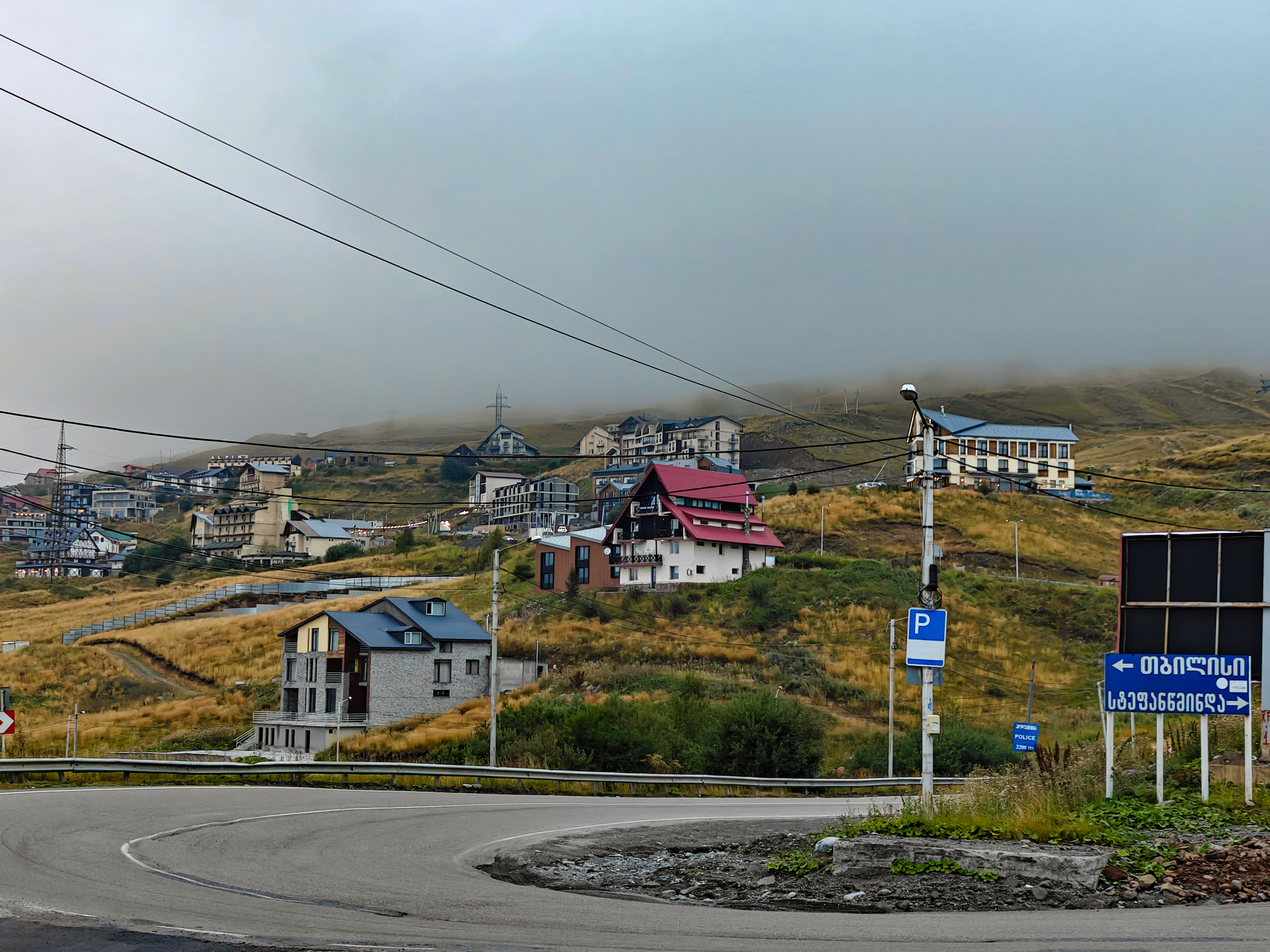
Our final stop was Gudauri, a high-altitude ski town framed by the Caucasus mountains. We stayed at Quadrum Ski & Yoga Resort — a multi-storey hotel with no elevators (don’t be fooled by the name). We were very grateful to be allotted rooms on the lower floors.
Craving home food, we stumbled upon Haveli, an Indian restaurant. Expecting something underwhelming, we were pleasantly surprised by the warmth of the host. With Sholay playing in the background, steaming matar paneer, dal, and rotis disappeared within minutes.

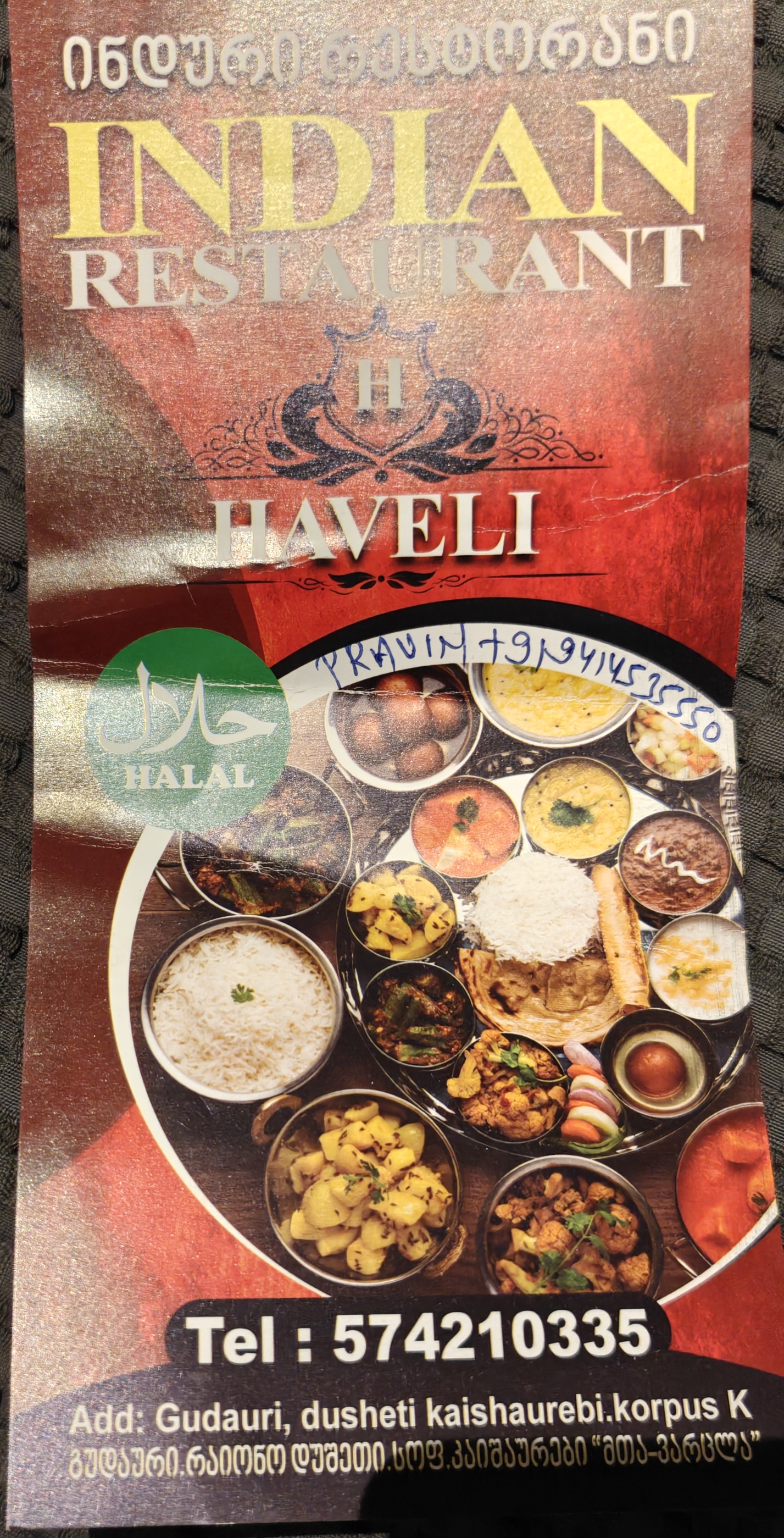
True to Indian hospitality, the owner even offered us a ride back because it was too cold to walk. We declined. Why miss the thrill of walking through fog and darkness, with the Russian Military Highway stretching ahead and the border not far away? Sometimes you don’t need drinks for an adrenaline kick.
That night ended huddled in a travel mate’s room, high on chai, laughter, and stories best told judgment-free.
Travel isn’t just about places. It’s about people.
Day 4 – Familiar Mountains, Foreign Roads (Kazbegi, Gudauri, Mtskheta)
By Day 4, I thought I’d hit mountain-view fatigue. Maybe even ruin-overdose. Add a dash of homesickness. And then Georgia gave me traffic which completed the loop!
A morning drive to Kazbegi and the Gergeti Trinity Church left me genuinely confused — was I in Georgia, Flam, or Ladakh? This is where I’ll admit: if you’ve travelled extensively in Europe or the Himalayas, the landscapes may not feel entirely new.
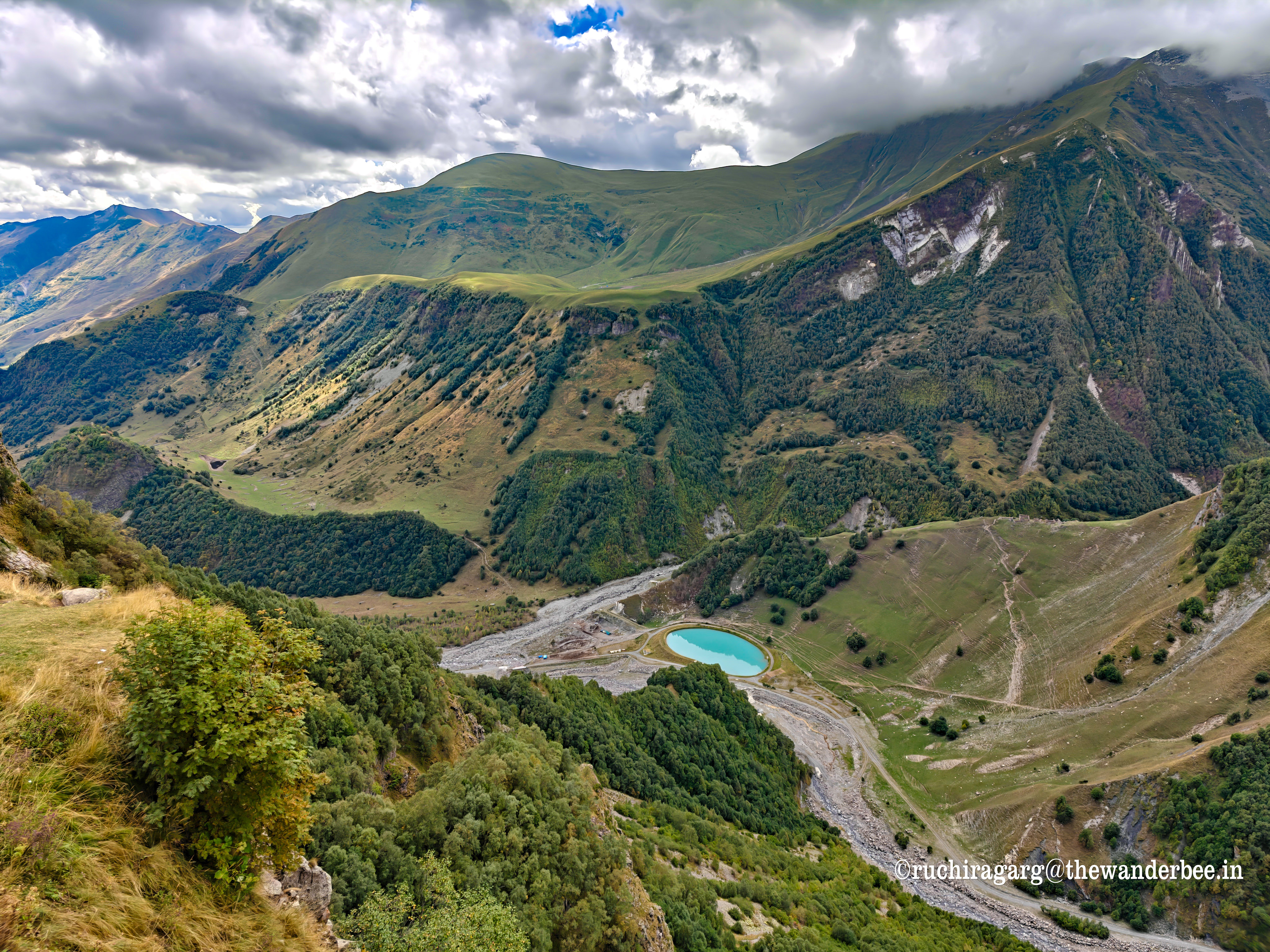
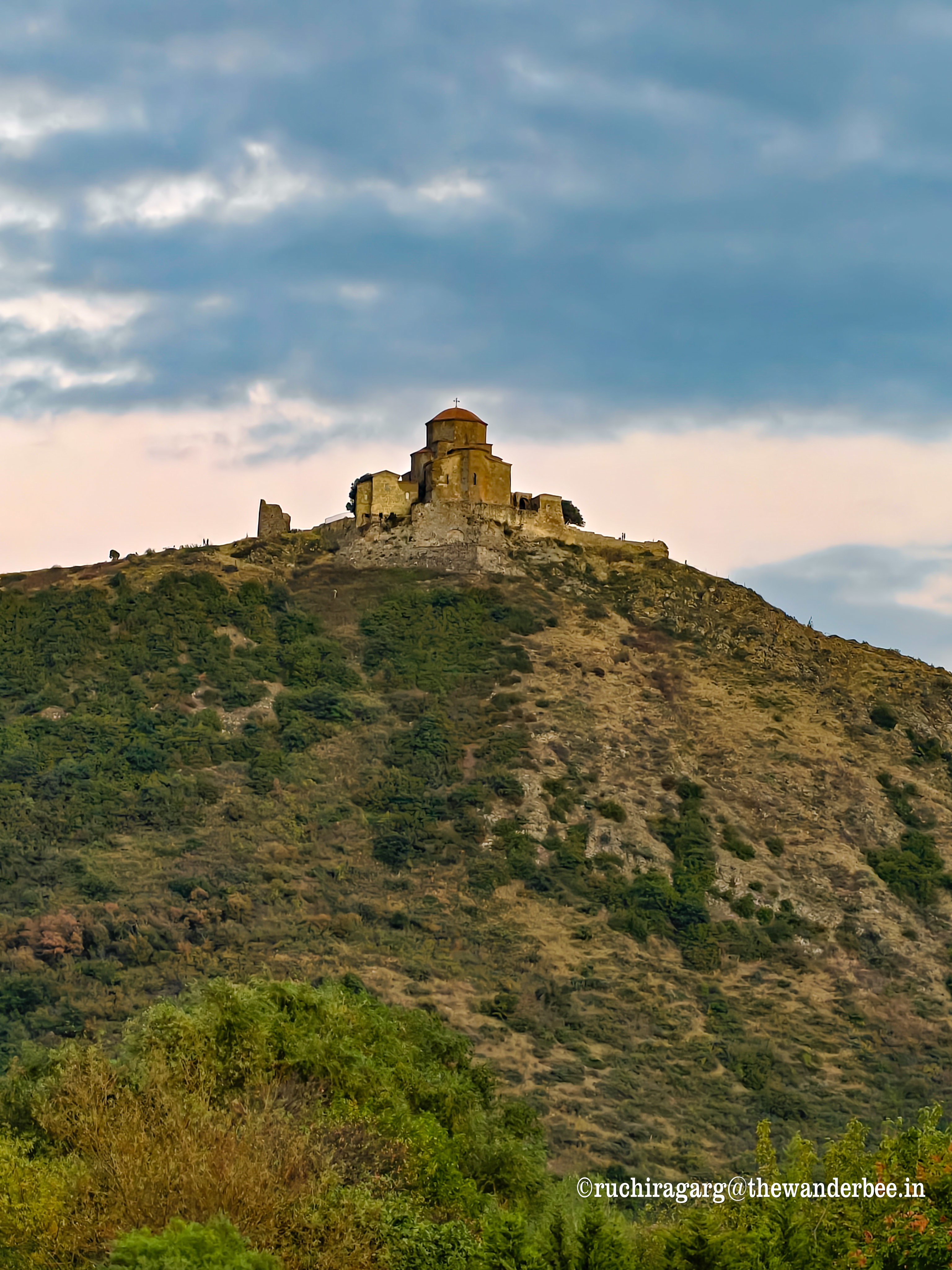
But the Gudauri Viewpoint snapped me out of it — a Soviet-era friendship monument turned vibrant open-air gallery with panoramic views.

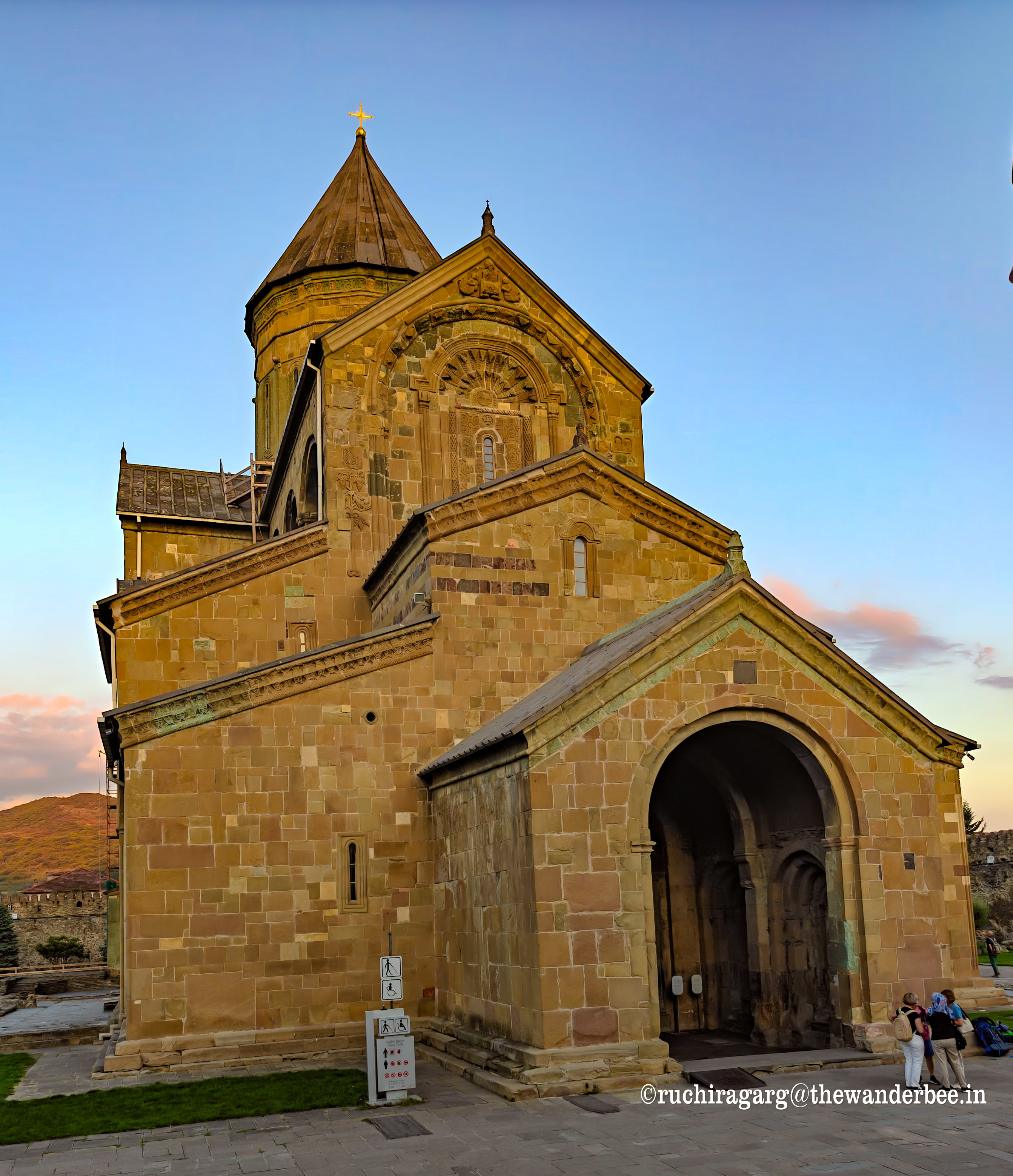
Later, Mtskheta, Georgia’s ancient capital and a UNESCO World Heritage Site, grounded the day. Walking through its still-practising cathedral felt like stepping into the origins of Georgian Christianity. The old town flea market is perfect for souvenir shopping.
We returned to Tbilisi that evening.
Lesson of the day? Georgia keeps remixing the same playlist — but throws in just enough surprises to keep you hooked.
Day 5 – History in High Definition (Chronicles of Georgia & Uplistsikhe)
The last day turned out to be the best.
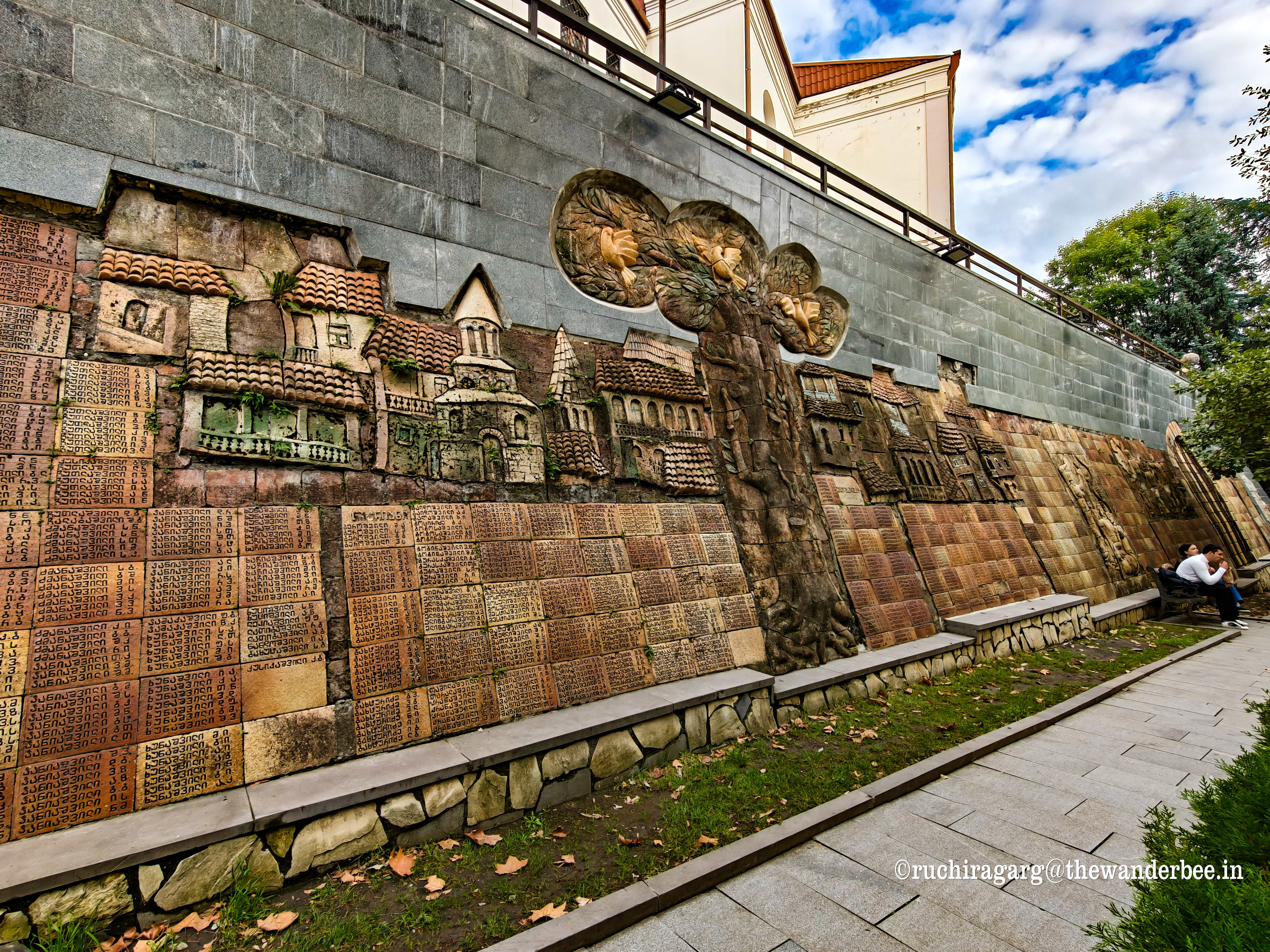
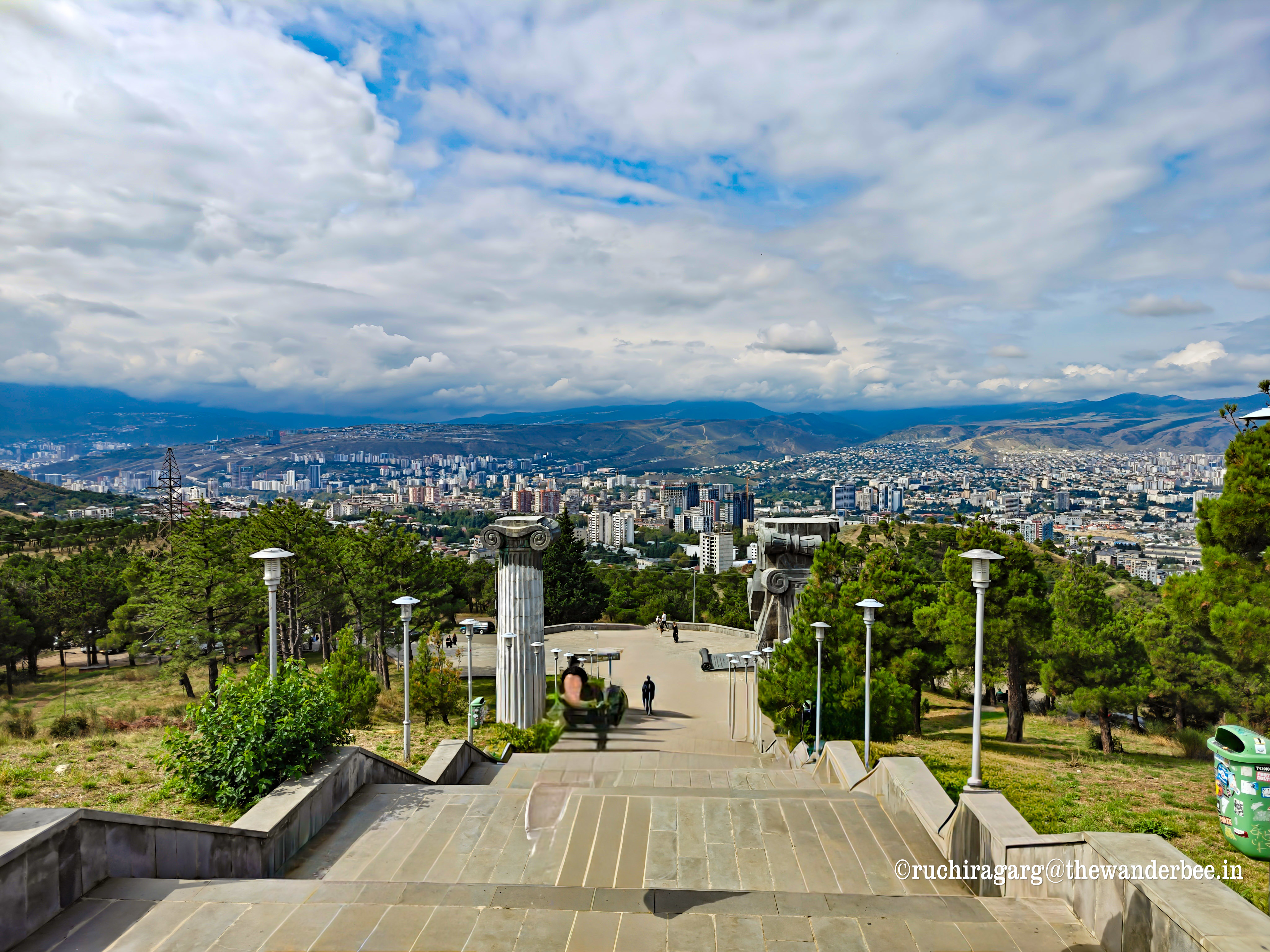
We began at the Chronicles of Georgia — towering stone pillars depicting kings, saints, and biblical scenes. Often overlooked, this place felt like history in 3D. A must-include in any Tbilisi itinerary.
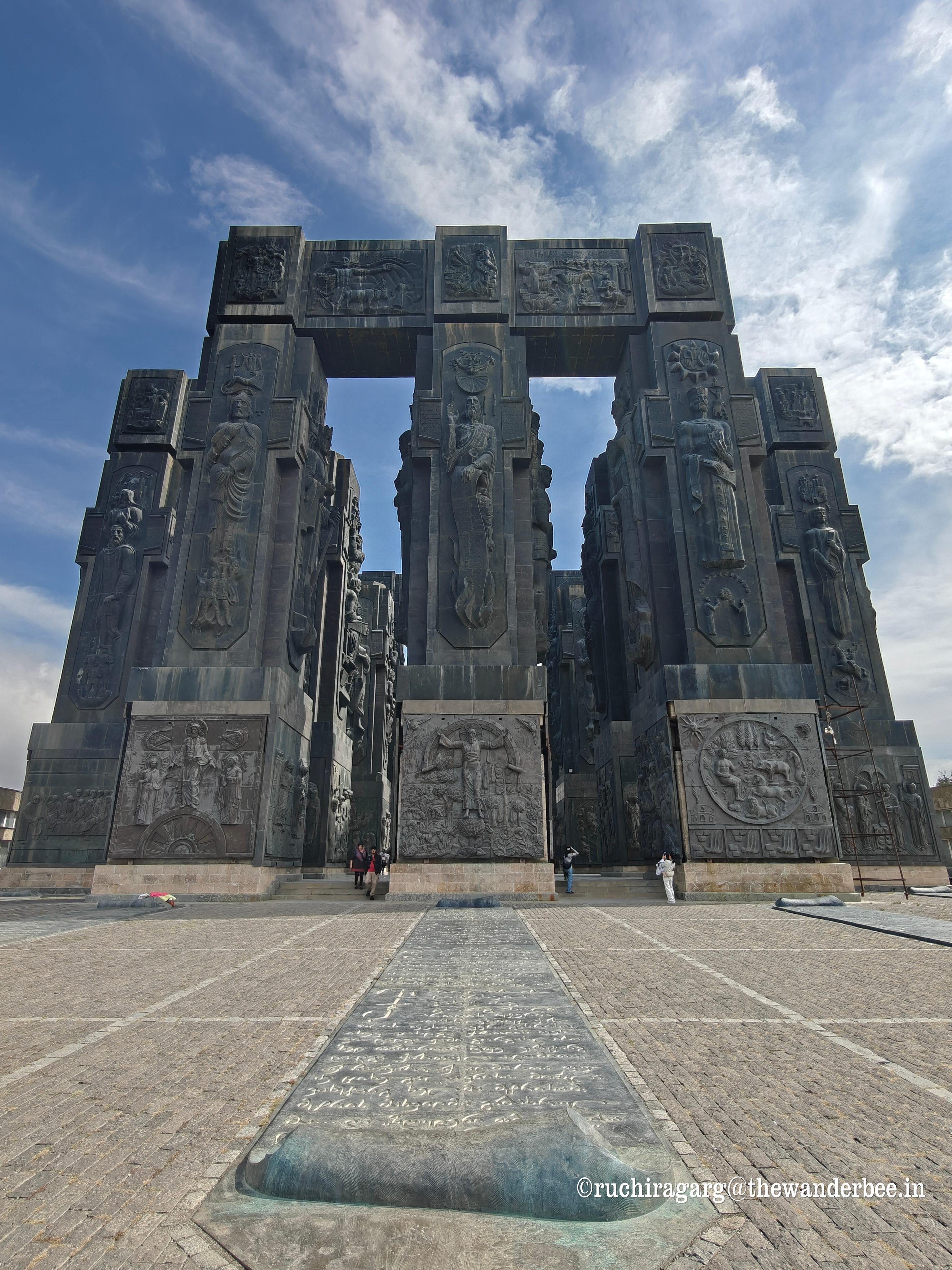
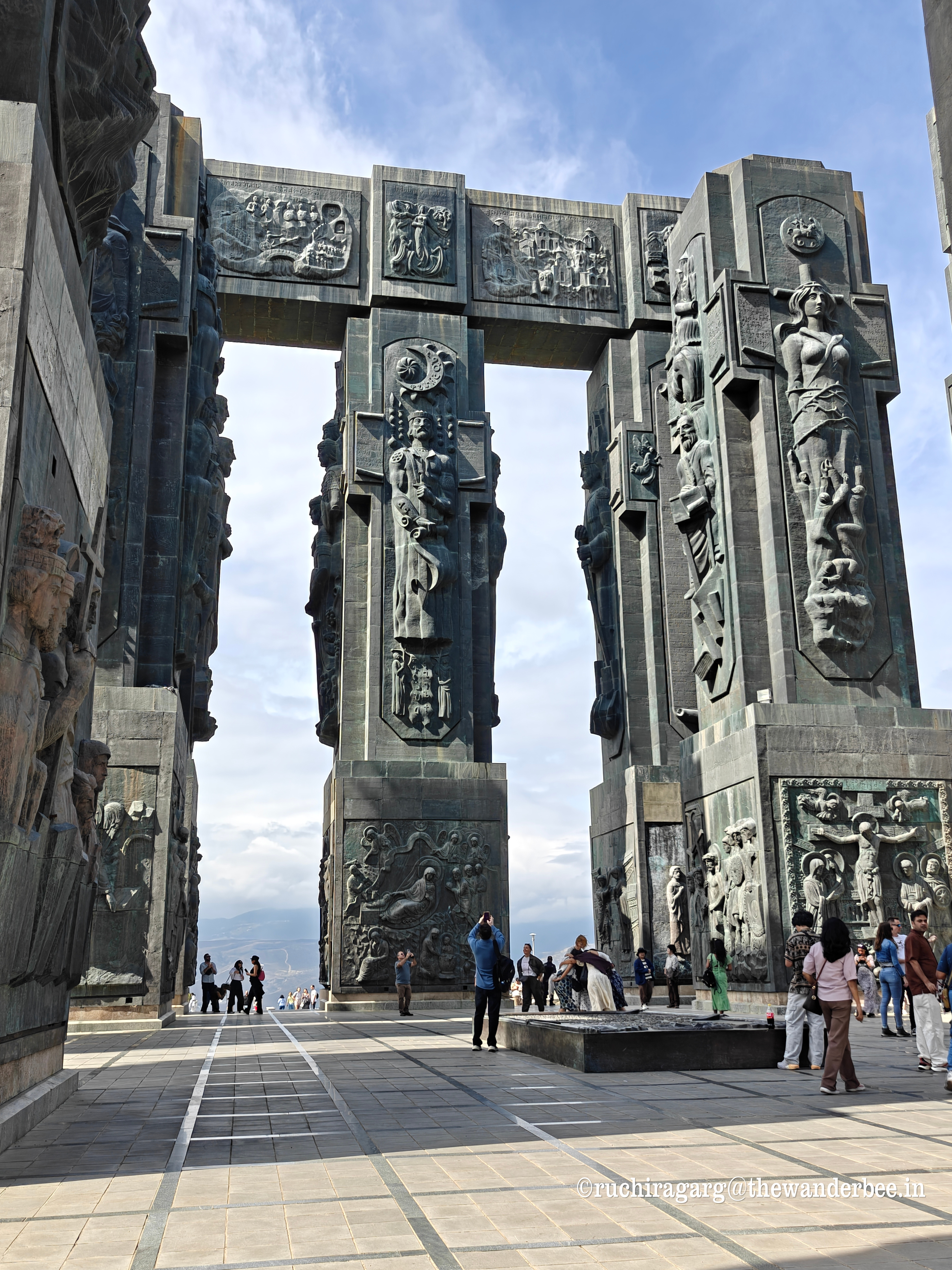
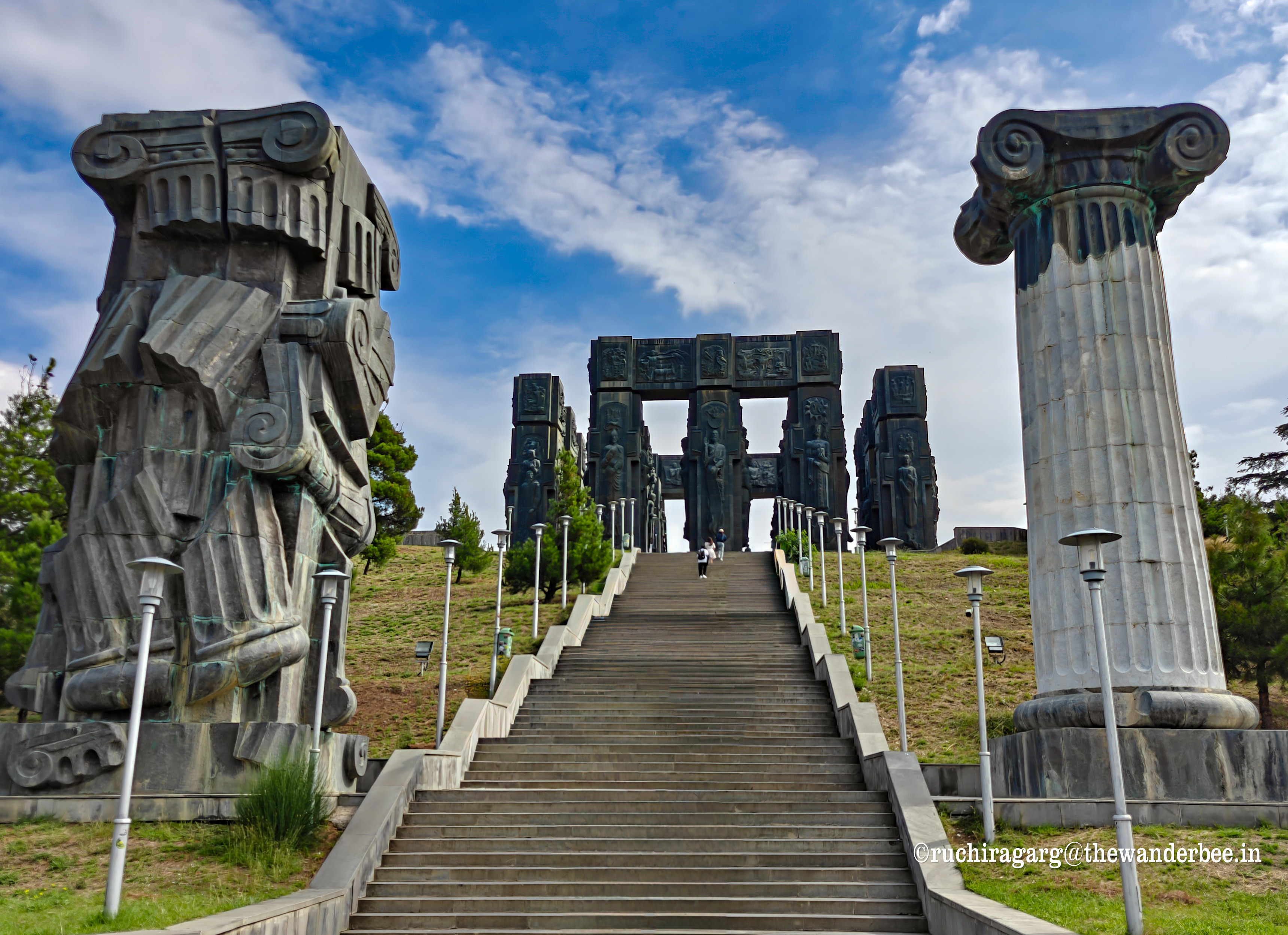
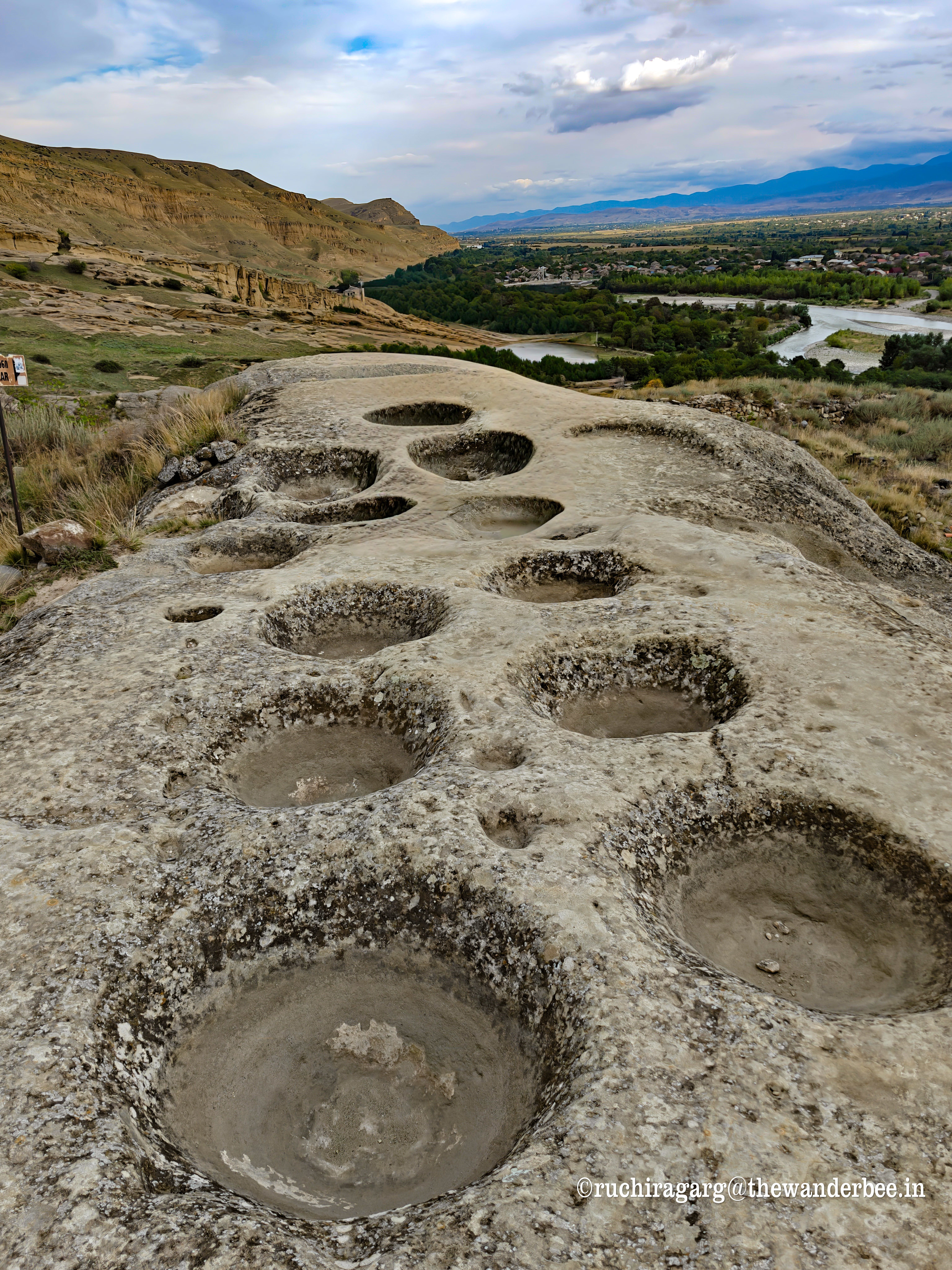
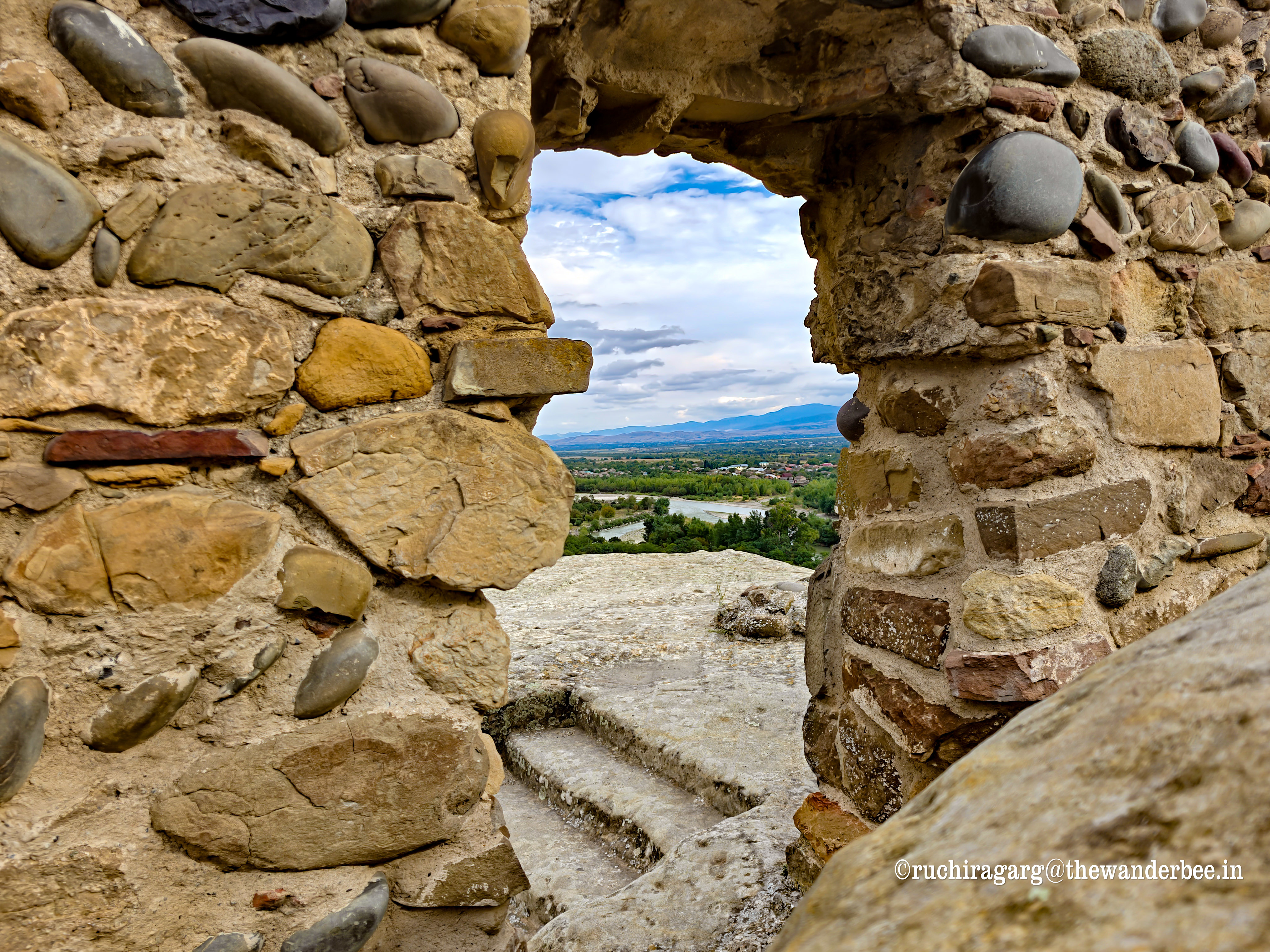
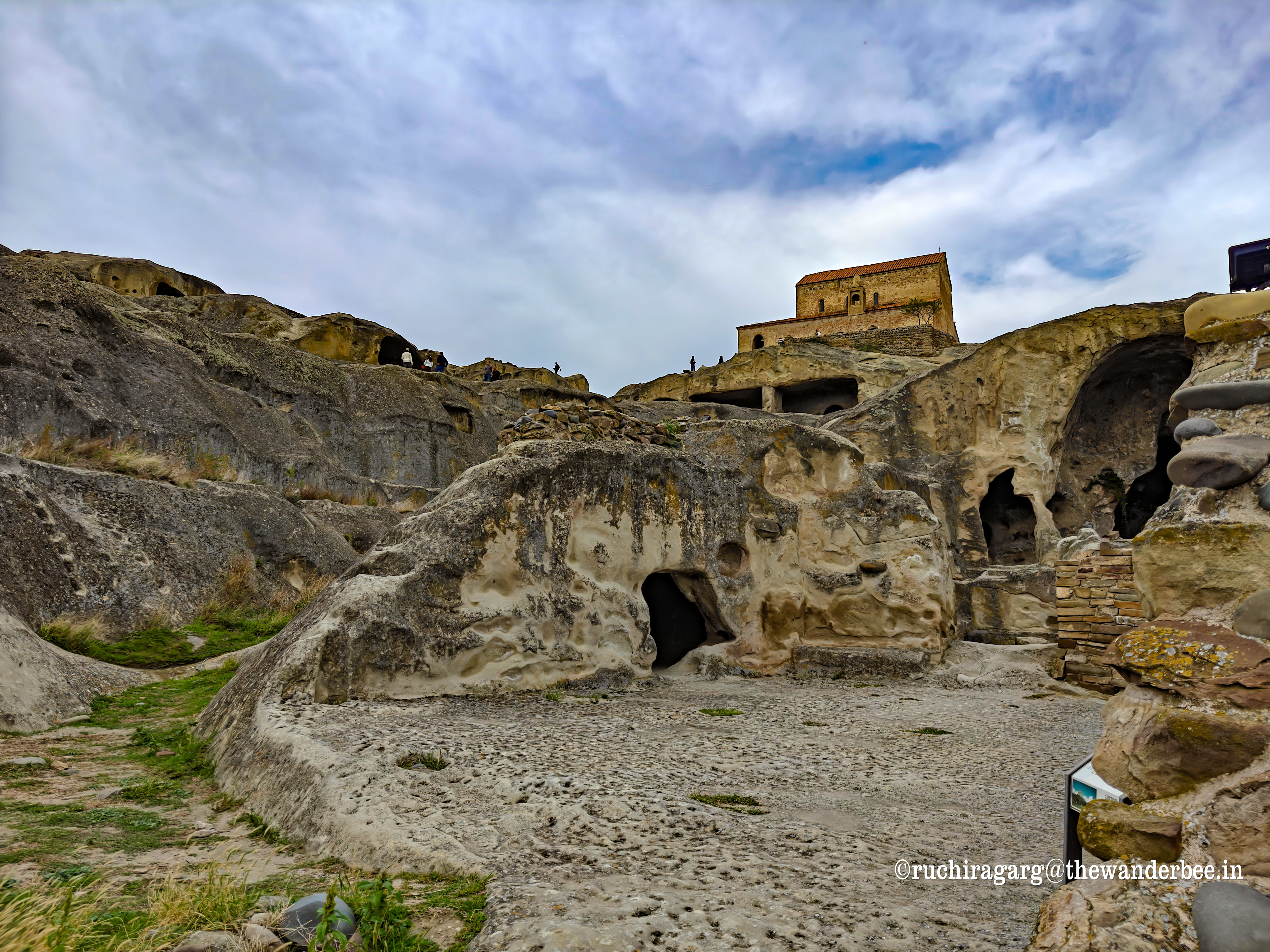
From there, we drove to Uplistsikhe, the ancient cave city carved into rock over 3,000 years ago. Predating Christianity, it offers a glimpse into Georgia’s earliest urban life — temples, wine presses, and dwellings etched into stone. There’s a large restaurant at the base where you can stop for lunch before the climb.
Georgia may be small — just 69,700 sq km, smaller than Assam — but it packs in mountains, monasteries, warriors, poets, wine, and stories spanning millennia. Yes, it’s called “Europe on a budget.” But Georgia isn’t a knock-off. It’s original. Fiercely proud.
The only thing missing? Hospitality that matches the pride. Service can be slow, warmth inconsistent, and language a barrier. Pride shines brightest when wrapped in warmth — and that’s where Asians could teach a thing or two.
We signed off with Mirza, our bus driver, blasting his favourite Georgian tracks — loud, proud, and perfect.
Something tells me… Batumi will be calling me back.
A Few Things to Note
- ATMs are widely available
- Hotel rooms are larger than typical European rooms
- Churches provide scarves for head covering — please return them
- Street dogs are vaccinated and omnipresent; don’t be afraid
- Authentic Indian food is easy to find (recommend Khushi Restaurant, Tbilisi)
- Carry 1-lari coins — many monument washrooms cost 1 lari and accept only cash

 The Wanderbee