
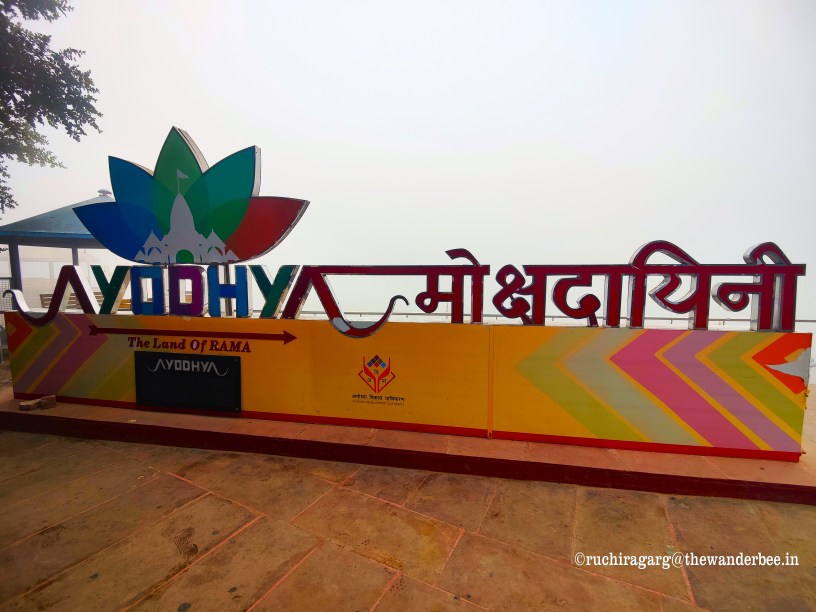
Since the inauguration of the Shri Ram Janmabhoomi temple in January 2024, I had been contemplating a visit with my family. Although the temple is still under construction and may take a few more years to fully open its doors in all its glory, the challenges of traveling with my aging parents made it clear that sooner would be better than later.
But as they say, visits to sacred places happen only when divinely ordained. If the Lord calls, everything aligns; if not, even the best-laid plans can falter. Our journey turned out to be one where faith triumphed over the limitations of logistical challenges and human support.
“What made you take on this challenging road trip alone with three others who have disabilities and mobility issues? Was it just because it was Ayodhya?” A friend asked when I shared our experience. Reflecting on it, the answer was probably yes. For the first time, we planned a trip on impulse, and to my surprise, all my co-travelers, who usually find reasons to avoid travel, enthusiastically agreed. The weather was favorable, we had time on our hands, and we all felt a deep, inexplicable pull to make this journey. Ayodhya was calling.
One of our companions has a pulmonary disability that prevents him from traveling by train or plane. Airports and airlines restrict the carriage of oxygen concentrators, and railway stations are not yet fully equipped to ensure seamless wheelchair access or reliable electricity for recharging medical devices during delays. This left us with only one option—a road trip.
And so, with faith in our hearts and determination in our minds, we embarked on a journey of a lifetime.
Journey to Ayodhya:
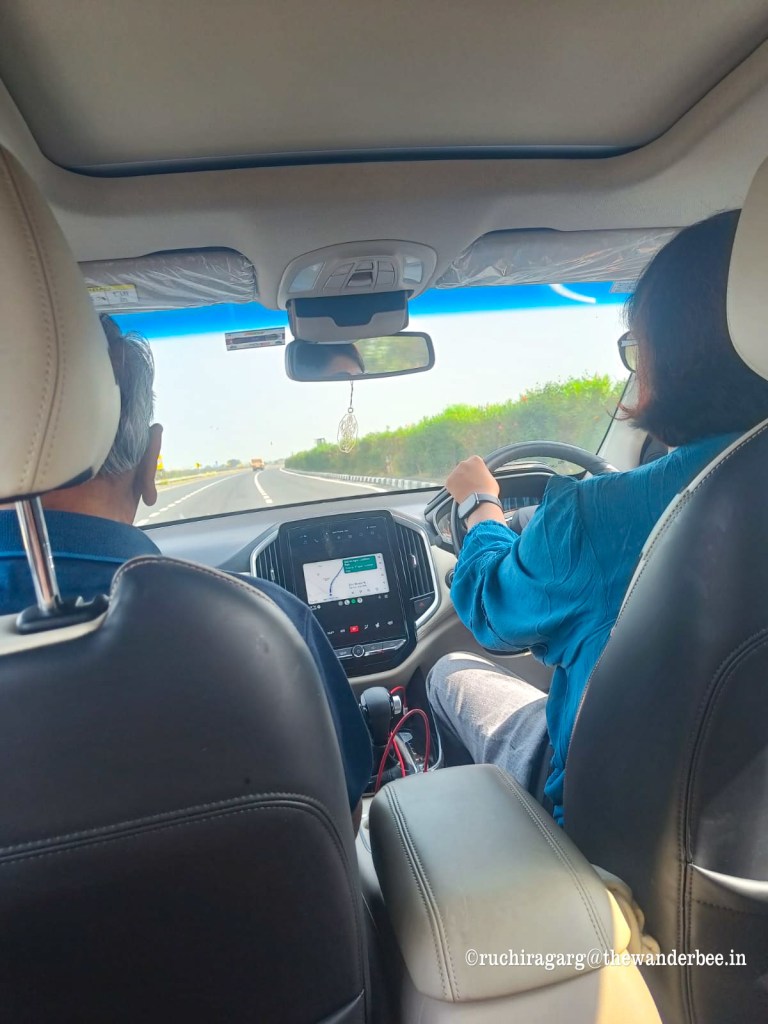
From Delhi, we took the Yamuna Expressway to Agra and then the Agra-Lucknow Expressway to Lucknow, where we halted for a night before continuing to Ayodhya. The journey to Lucknow took approximately seven hours, including breaks. Both expressways offered a smooth and delightful driving experience, with well-maintained roads and minimal traffic interruptions.
The expressways have food courts, toilets, and fuel stations at roughly one-hour intervals. However, there are no independent dhabas or restaurants, so missing a designated stop means waiting for the next one. Watch for exit signs carefully, as they can be easy to miss at high speeds.
Accessibility Tip: On the Agra-Lucknow Expressway, food courts are located on the first floor without elevator access, making it challenging for those with mobility issues. Toilets on the ground floor are generally accessible.
Ensure your Fastag wallet is recharged with at least ₹1,500 to cover multiple toll booths on this route.
The next morning, the drive from Lucknow to Ayodhya took 2.5 hours. Though not an expressway, the highway was in good condition, making the journey pleasant.
Stay at Ayodhya
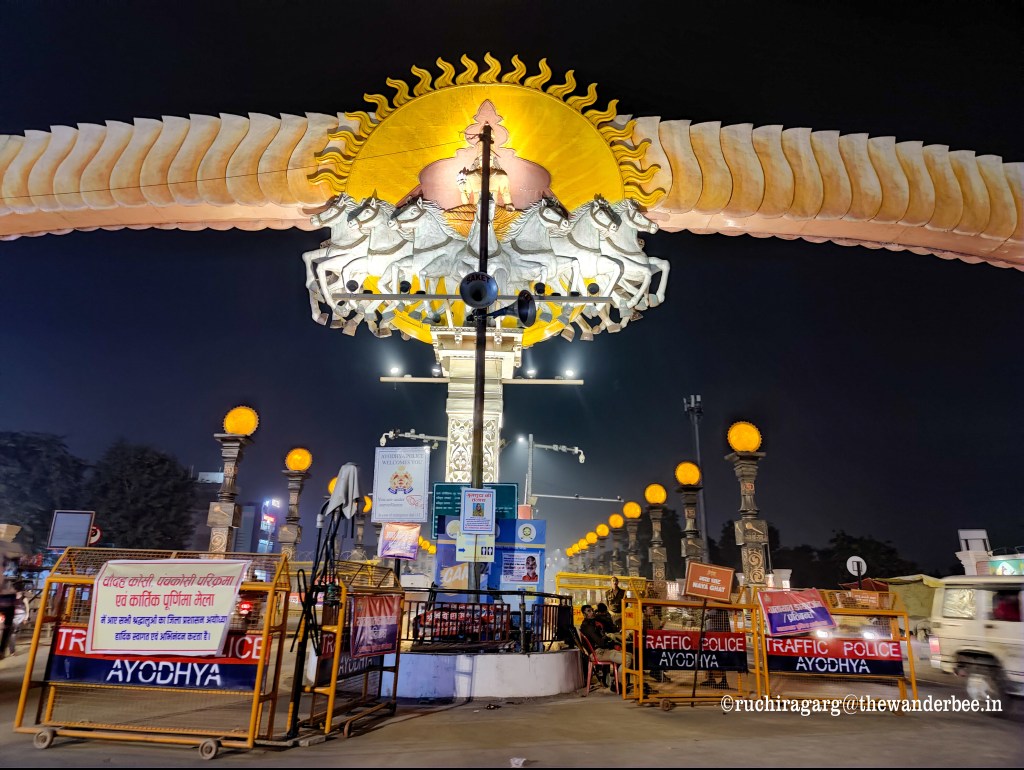
While there are numerous home stays and guest houses in Ayodhya, given the special needs of our entourage, we needed a proper hotel with elevator access, parking and in house restaurant services. After much research I selected the Hotel Krinoscco which albeit priced much higher than range did not disappoint in services. The staff was very helpful and responsive, the rooms were comfortable and the food at the restaurant was tasty. They did not have packages including breakfast though it was available on payment basis.
The Ram Janmabhoomi Temple Visit:
We visited the Ram Janmabhoomi temple twice during our trip, each at a different time of day. While the Ram Path is accessible on foot, with public transport dropping you about 300 meters from the temple, those traveling with disabled companions who need vehicle access to the temple entrance should plan their visit in the early morning. I strongly recommend hiring a local taxi service instead of using an outstation car, as parking can be a challenge.
We arrived at 7 a.m. in a local taxi, which easily dropped us at the temple gate. The driver parked further ahead without any issues. Wheelchairs were available a short 20-step walk from where the car dropped us off. As soon as we got off the car, we were approached by people putting the Shri Ram block printed tilak on our foreheads. We gave them some cash change in return. Note that there is no pandit inside the temple putting any tilak so if you would like to put up, just get it done outside the temple. To access a wheelchair, I needed to provide the Aadhaar cards of all the individuals requiring them. The queue was short at that hour, and we obtained the wheelchairs quickly. However, I noticed a glaring issue—there was no verification process to confirm if the person requesting a wheelchair was actually disabled. This lack of oversight could lead to misuse, as wheelchair users were allowed separate, expedited “VIP” access for darshan.

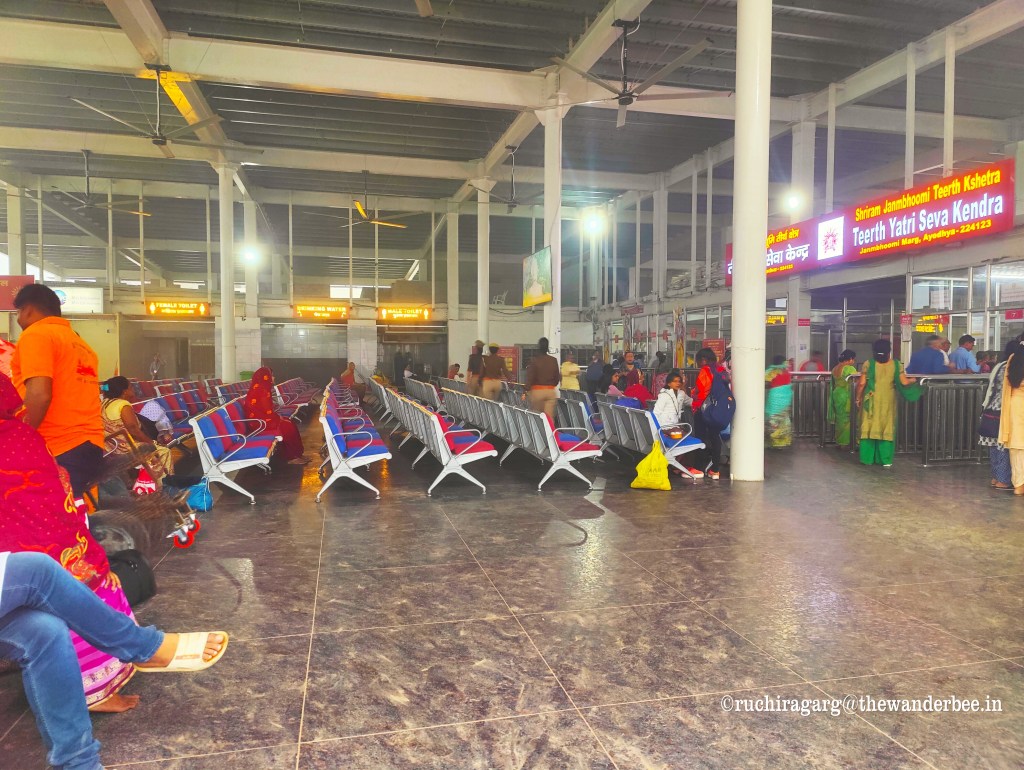
Once we had the wheelchairs, the process moved swiftly. Lockers were available at the temple entrance to store mobile phones, smartwatches, purses, and handbags, although small clutch pouches with loose change or cash were allowed inside. For those with wheelchair access, shoes could be worn up to a certain point, with a dedicated area to deposit them near the shrine entrance. Drinking water and handwashing facilities were conveniently located here.
The queue for darshan was managed well and the deity was visible clearly amidst the brilliant lighting. We could see it clearly as we walked towards it and each got their 15 seconds in front of the deity to offer our prayers before being asked to move forward.
It’s worth noting that no external prasad or flower offerings are permitted at the temple. After completing darshan, devotees receive a small packet of elaichi daana prasad. The shops outside the temple sell sweet boxes labeled as “prasad” which are just plain sweets and have no linkage to the temple ceremonies; however, given the tendency to carry prasad back home to near and dear ones after visiting such a revered temple, locals suggest sprinkling the temple’s elaichi dana prasad over the sweets to “transform” them into prasad. You can also ask the priest distributing the prasad at the temple for an extra pack. They usually were graceful about such requests.
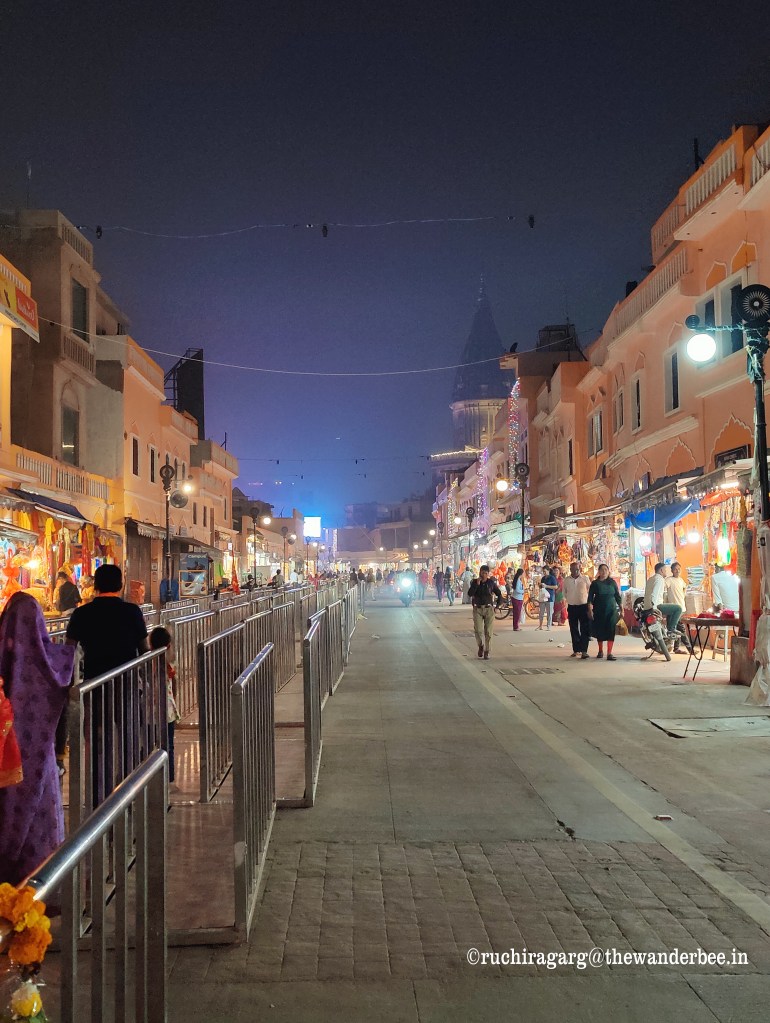
At 7 a.m., the entire experience was smooth and efficient—we completed our darshan in just 25 minutes. The wheelchair center board mentions that we should pay INR 150 to the wheelchair person, but the general expectation was INR 200 which we happily gave for their good behaviour and effort. The road outside the temple is a market area so if you want to carry any souvenirs from Ayodhya, you can get them here.
Accessibility Issues:
The scene changed dramatically when we returned at 11 a.m. with my pulmonary-disabled relative. This time, we faced a complete lack of awareness and sensitivity from the police administration.
“Why do such people come here?” a police inspector yelled when we requested permission to drive up to the temple entrance. By then, police barricades were in place, and decisions about vehicle access were entirely at the discretion of the officers. Our car was stopped at the beginning of the road, and we were told to either use the back entrance—requiring a longer walk—or drop off passengers to undertake a 300-meter trek to the temple. Holding his portable oxygen concentrator, my relative couldn’t manage such a walk. But compassion wasn’t an option—the inspector dismissed us, prioritizing busloads of able-bodied visitors arriving for a local leader’s padyatra. “Show me a VIP pass or move your car!” he barked.
After nearly an hour of navigating alternate routes, we finally found a less-policed access point. Non-police staff were more considerate, and I managed to secure a wheelchair after explaining our situation. By then, the crowds had grown, with many able-bodied individuals misusing the wheelchair access line. With his oxygen concentrator’s battery dwindling, we rushed to complete the darshan before the temple’s midday closure.
At the next checkpoint, however, we hit another hurdle. The police stopped my relative, unfamiliar with what an oxygen concentrator was and unable to communicate effectively with their control room. It was disheartening—especially in a country that endured the devastating COVID-19 delta wave, where respiratory issues affected nearly every family. They just pulled his wheelchair out of the queue and turned it towards the road. A shameful sight for a temple that prides itself on being accessible.
After losing precious time pleading, we were eventually allowed to proceed, more to avoid confrontation than out of compassion. Near the main shrine, the wheelchair access was halted again as the priority line for the disabled merged with the sugam darshan queue. The person managing the queue couldn’t handle the influx of able-bodied devotees chanting “Jai Shree Ram,” leaving disabled individuals waiting helplessly.
With time running out, I had to appeal yet again to another policeman, who finally relented and allowed our wheelchair to pass. We completed the darshan, but the experience was marred by the systemic lack of awareness and support for severe medical challenges. When we came out of the shrine, we discovered that there was no drinking water in the taps as it was only filled once in the morning. Another sign of poor administration despite the number of staff assigned to the temple.
This experience highlights a deeper issue: accessibility cannot be limited to providing free wheelchairs. It requires education, awareness, and empathy among temple administration and specially the police administration and staff. Without these, the challenges faced by disabled devotees will persist—even when the temple is fully constructed.
A temple, especially one designated as a teerth, should be a sanctuary for those seeking solace, faith, and respite. For individuals who endure immense physical challenges to reach the doorstep of divinity, the least we can offer is an inclusive experience that upholds the values of compassion and faith.
Faith Amid Challenges:
While the police administration at the Ayodhya temple seemed determined to create roadblocks, I am convinced that it was the power of faith that kept us moving forward. Against all odds, help arrived in unexpected forms, enabling us to overcome each obstacle and complete the darshan.
The kindness and support we received from others along the way stood in stark contrast to the apathy of the police. When the oxygen concentrator’s battery failed at 10:30 p.m. the night before, we miraculously found a distributor in Lucknow who arranged to send a replacement battery to Ayodhya just in time for the temple visit. It felt like divine intervention itself.
At our hotel, the travel desk in charge went above and beyond. Personally driving us to the temple, he found an alternative route to the temple gate, defying the police’s rigidity with determination and empathy.
The supervisor at the wheelchair center was another beacon of hope. Amidst the chaos, he took the time to listen, understood our challenges, and came out personally to ensure we secured a wheelchair—without expecting anything in return.
Even the people pulling the wheelchairs played a crucial role. Despite the crowd and pressure, they were patient, kind, and focused, ensuring that the person with special needs had a smooth experience without feeling rushed. Their care and dedication left a lasting impression.
Back at the hotel, the staff’s compassion continued to shine through. They empathized with our ordeal and accommodated our late checkout without a word of complaint.
And finally, when I stood before Ram Lala’s statue, despite all the hurdles, my faith in divine powers was restored. The journey had tested our resilience, but it also reaffirmed that faith, compassion, and the kindness of strangers can illuminate even the darkest moments.
Exploring Ayodhya:
Hanuman Garhi:
This revered temple of Lord Hanuman, built in 1855, stands near the Ram Janmabhoomi temple. It is believed that a visit to one temple is incomplete without the other, as Lord Ram and Hanuman are inseparable. However, accessing Hanuman Garhi requires climbing 76 steep steps. For those with mobility challenges, a backdoor entrance reduces the climb to about 50 steps, though it may still be inaccessible for some. A wheelchair assistant charges INR 100 for helping individuals get from the street to the temple backdoor entrance and back. They wait for you to return after the darshan and the same person brings you back.
Unlike the Ram temple, you can bring sweets and flowers as offerings here. Besan laddus from the local shops are highly recommended, as they are said to be Lord Hanuman’s favorite. Visitors are also allowed to carry mobile phones and click photos, with many even offering live darshan to relatives through video calls—a modern way of sharing blessings which is what we also did for our family members who could not access the temple.
Naya Ghat
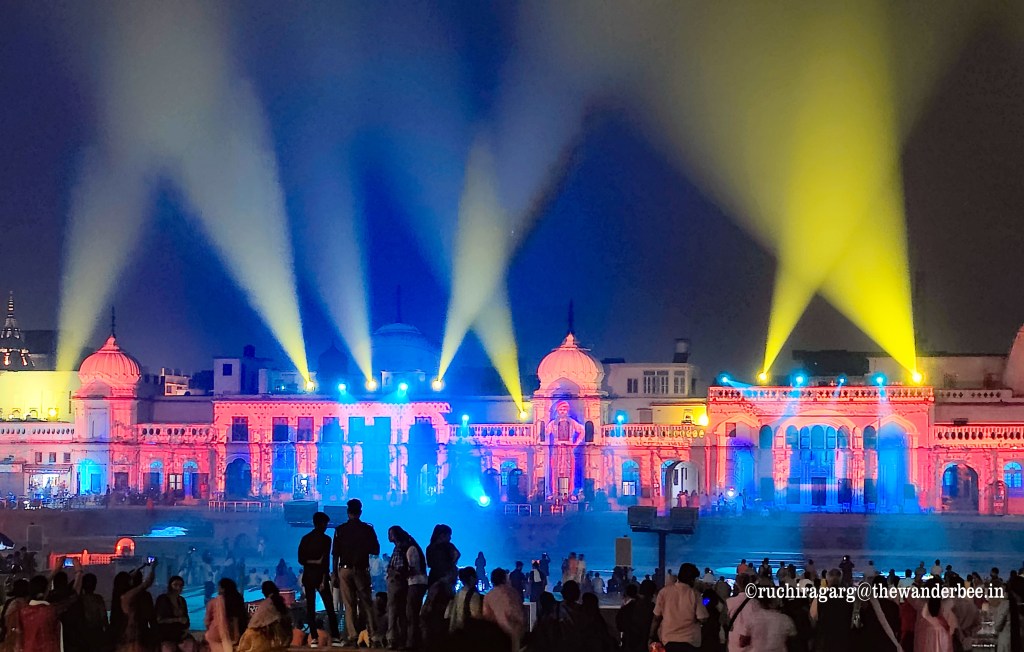
The banks of the river Saryu come alive every evening with the mesmerizing aarti at 6 p.m. Arriving early is essential to secure a good spot on the steps, as the ghat becomes very crowded. For a small donation, you can participate in the aarti and gain a closer view. On our visit, the aarti began at 6:30 p.m., followed by a captivating laser show depicting the Ramayana on the opposite bank.
The ghat, bustling with families, felt more like a festive gathering, offering photo opportunities, children’s activities, and snacks. Be prepared for a short walk and a few steps from the parking area to reach the ghat.

Guptar Ghat

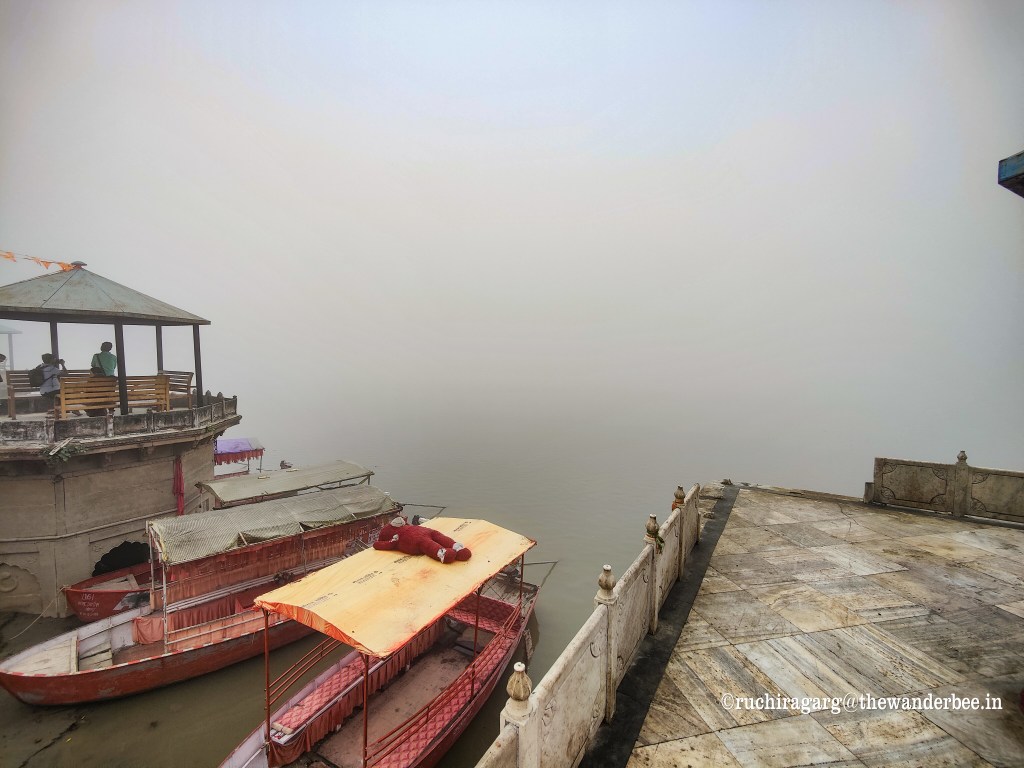
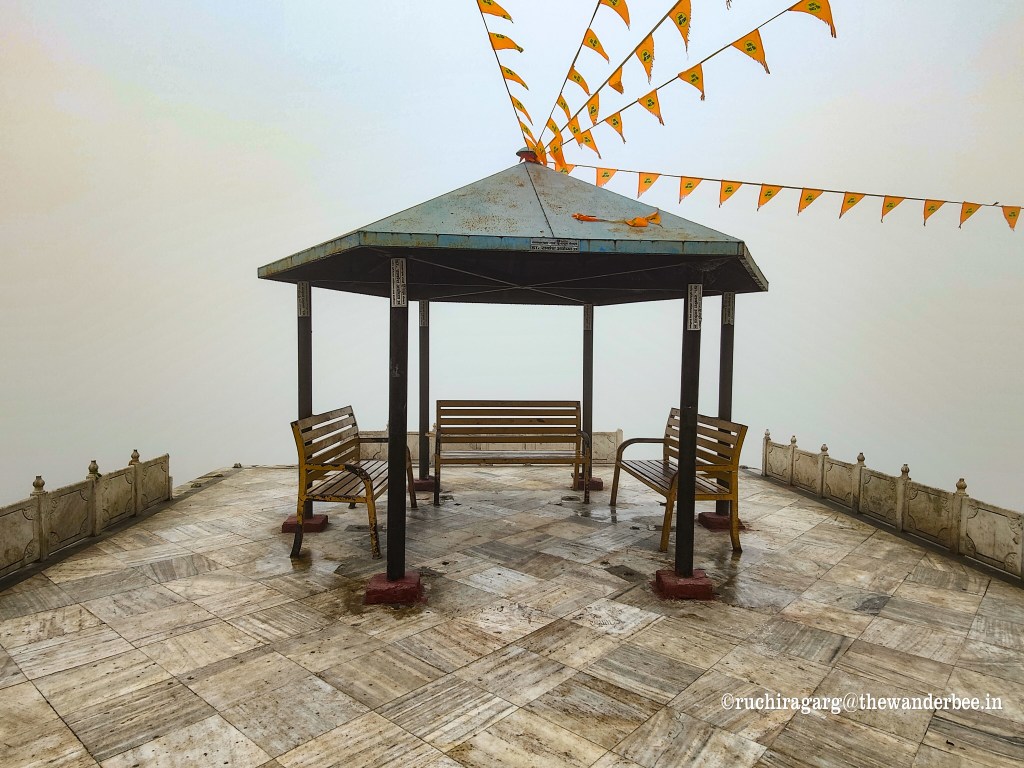
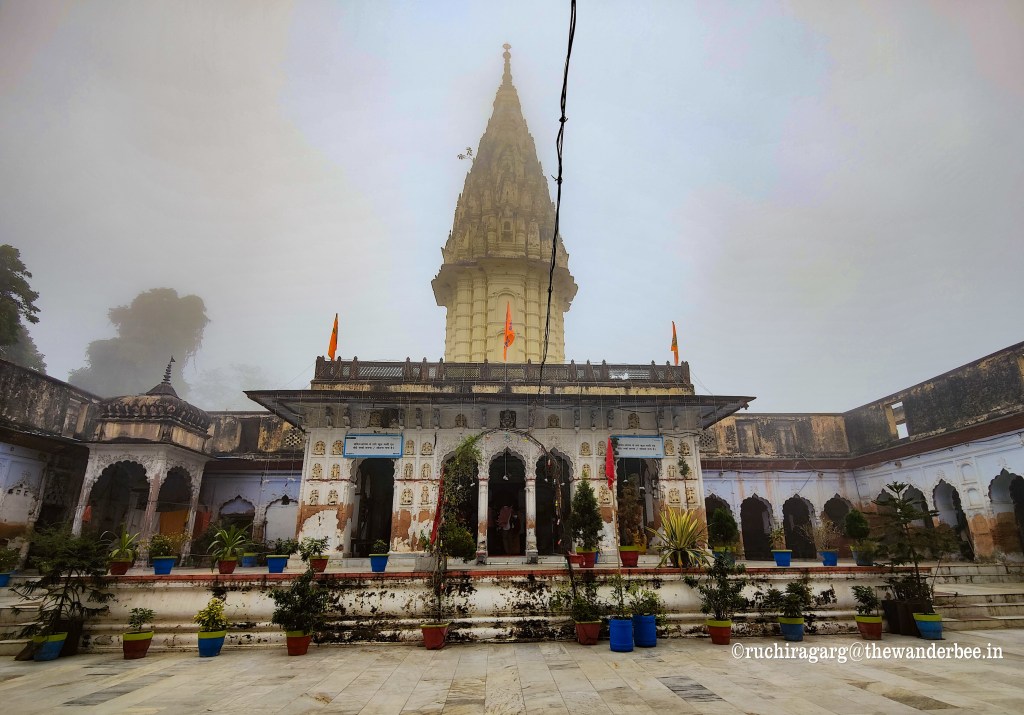
This serene location about 10 kms from the city, holds deep spiritual significance, as it is believed to be where Lord Rama and his brothers relinquished their human forms, as they took the Jal Samadhi in the river Saryu. The ancient temple here was uncrowded during the morning, allowing for peaceful darshan. The foggy ghat was clean, and the few steps to the temple were manageable. Gazebos along the river provided quiet spots to sit and enjoy the view, adding to the tranquil experience.

Lata Mangeshkar Chowk
This recently inaugurated tribute to the legendary singer serves as a vibrant city center near Naya Ghat and the new sought after selfie spot. The giant sitar at the chowk is a striking feature, and the area offers a relaxed atmosphere for evening strolls, reminiscent of Delhi’s India Gate.

Practical Tips for Visitors
- Food: Unlike Banaras or Rishikesh, Ayodhya doesn’t have specific street food specialties. Most restaurants, including hotel dining, offer standard meals with both vegetarian and non-vegetarian options.
- Cityscape: The city’s commercial areas have been renovated since its renaming from Faizabad to Ayodhya. Roads are well-developed, making driving around easy.
- Cash: Carry ample cash in small denominations, as many places, especially temples, operate on cash-only transactions.
- Navigation: The Ram temple is intuitive and well-organized. Facilities like wheelchairs, lockers, a waiting lounge, and toilets are available, making any tour guides unnecessary unless you have special needs.
- Timing: An early morning visit to the Ram temple ensures a smoother experience.
- Transport: Public transport is readily available to take you around the city.
- Accessibility: Accessibility at Ayodhya remains inconsistent, with facilities like wheelchairs and ramps available but poorly regulated. Awareness and training for staff could improve the experience for disabled devotees.
A Journey of Warmth and Faith
Ayodhya’s overall development and the warmth of its people left a lasting impression on me. The city’s hospitality turned what seemed like an impossible journey into a successful pilgrimage for our loved one with special needs. While the lack of awareness, education and empathy among the police administration was disheartening, it was far outweighed by the kindness and compassion we encountered from the others at every turn. Ayodhya is a city where faith thrives—not just in the divine but in humanity itself. A city that is rediscovering it’s ancient heritage yet evolving to strike a balance between tradition and progress.

 The Wanderbee